Beyond the Window: Custom Pillows, Bedding, and Upholstery for Complete Interior Projects
The residential project that begins with window treatments rarely ends there. Once drapery is specified and roman shades are in production, attention turns to the pillows that sit on the newly upholstered sofa, the bedding that coordinates with the master bedroom drapery, and the dining chairs whose seat cushions have been worn through over a decade of use. These soft goods are not peripheral decisions. They are what completes the room.
For interior designers and trade professionals managing premium residential projects, custom pillows, bedding, and upholstery represent significant scope, significant client expectation, and significant opportunity for the workroom partner who can deliver the full range under one roof. When pillows come from one source, bedding from a second, and upholstery from a third, the construction quality varies, the timelines never align, and the palette coordination described in the design documents drifts during execution.
This post covers the three primary soft goods categories Roseworks Fabrication handles alongside window treatment scope. The focus is on what designers should know about specifying each category, what distinguishes workroom fabrication from retail purchasing, and how consolidating scope simplifies both the project and the client experience.
Custom Pillows
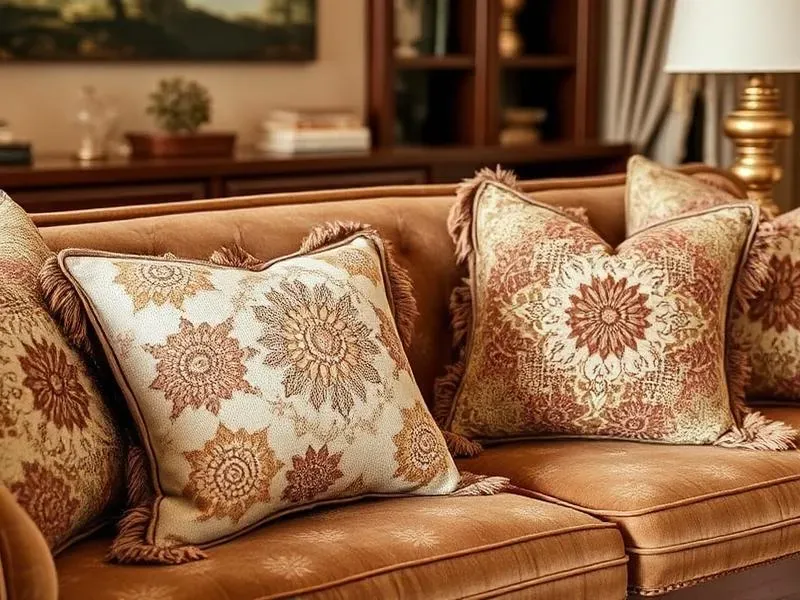
Pillows are the soft goods category with the largest gap between perceived simplicity and actual specification depth. A pillow looks like a square of fabric with stuffing. Clients see the result and assume the decision set is minor. The designer who has specified custom pillows knows the real range of choices: size, shape, fabric, pattern orientation, trim, closure type, insert type, and fill weight. Each decision affects how the finished pillow looks, how it holds its shape, and how long it continues to look fresh.
Size and shape. Standard residential pillow sizes range from 18-inch square for general throw pillows, to 22-inch or 24-inch for oversized lounge pillows, to 14-inch or 16-inch for smaller accent scales. Rectangular pillows in 12-by-22 or 14-by-24 lumbar proportions create contrast against the square dominant sizes. Bolsters, round pillows, and custom shapes expand the vocabulary when the design calls for it.
Fabric and pattern orientation. Patterned fabrics require explicit decisions about pattern orientation on the pillow face. Some patterns look intentional only when railroaded (pattern running horizontally across the pillow face). Others only work vertically. Mixed pattern directions across multiple pillows in the same grouping read as thoughtful or chaotic depending on how they were specified.
Trim and welt. A custom pillow without trim reads as clean and modern. A pillow with contrasting welt, flange, fringe, or cording reads as tailored. The trim decision should connect back to the palette logic for the room. Trim that repeats from drapery edges to pillow welt to upholstery piping creates a visible design thread through the room.
Closure. Invisible zipper, button closure, knife-edge overlap, or envelope fold. Each closure has its own look and its own maintenance profile. Invisible zippers disappear entirely. Button closures become decorative. Envelope folds allow removable covers without visible hardware. The closure decision should match the pillow''s role in the room.
Insert type and fill weight. Feather-down blends with different fill weights produce different feels. A pillow filled to 90% of its cover capacity looks plush and full. A pillow filled to 75% capacity has a softer, more casual hand. Foam inserts feel firm and hold shape. The insert decision affects how the pillow looks when fluffed, how it feels to lean against, and how it settles over time.
Roseworks fabricates custom pillows from COM fabric or from trade fabric sourced through the workroom. Inserts are sourced at matching quality tiers. Specification discussions happen in the same session as window treatment specification for coordinated projects, so palette decisions carry through without separate communication cycles.
Custom Bedding
Bedding is the soft goods category where custom fabrication most obviously outperforms retail. A retail duvet cover is produced for cost efficiency. A workroom duvet cover is produced for a specific bed, in specific fabric, with construction that holds up to the daily handling bedding receives.
The standard bedding scope for a primary bedroom includes a duvet cover, coordinating shams (typically two standard and two Euro for a king bed), a bed skirt, and decorative pillows or bolsters. Each piece is specified individually but fabricated as a coordinated set.
Duvet covers. The duvet cover is the dominant bedding piece. Fabric selection, closure type (buttons or hidden zipper), construction weight, and any decorative detailing (piping, banding, contrasting back) are specified for the duvet. Standard king duvet covers measure approximately 106 by 96 inches, but custom fabrication allows any dimension the project requires for oversized mattresses or custom mattress depths.
Shams. Shams are the decorative pillow covers that sit in front of sleeping pillows on a made bed. Standard shams, Euro shams, and boudoir shams cover different scale points. Shams typically have flanges, piping, or banding that references either the duvet detailing or the broader room palette.
Bed skirts. The bed skirt (sometimes called a dust ruffle) covers the box spring or mattress foundation. Bed skirt styles include tailored (flat panel with corner pleats), gathered (fully ruffled), or platform (tailored with side pleats). The bed skirt should match the formality level of the bedroom. A tailored bed skirt reads as modern and masculine. A gathered bed skirt reads as traditional and romantic.
Decorative pillows for the bed. The decorative pillow layer sits in front of the shams. This is where accent fabrics typically appear in the bedroom palette. A pair of rectangular pillows in an accent fabric, or a single bolster across the front of the bed, creates the final composition layer.
Custom bedding specification should coordinate with the bedroom''s window treatments and any upholstered pieces such as a headboard or bench at the foot of the bed. When all bedroom soft goods are fabricated at Roseworks, the palette and construction coordination happen inside the same specification conversation rather than across multiple vendor relationships.
Custom Upholstery
Upholstery is the soft goods category with the longest history of workroom fabrication and the clearest distinction between custom and retail. Retail furniture manufacturers produce sofas, chairs, and ottomans at standardized dimensions in catalog fabrics. Custom upholstery allows any furniture piece to be upholstered in the client''s chosen fabric, at any quality tier, for any specific project.
The upholstery scope in a typical residential project includes reupholstery of existing pieces, slipcovering (a removable fabric cover over existing upholstery), and custom-built upholstered pieces such as headboards, benches, or banquettes.
Reupholstery of existing pieces. A client who owns a quality sofa or chair with a worn fabric can commission reupholstery in a new fabric. The underlying furniture structure is preserved. The old fabric is removed, the padding and springs are inspected and replaced if needed, and new fabric is applied over the refurbished base. Reupholstery is appropriate for pieces with structurally sound frames and sentimental or quality value.
Slipcovering. A slipcover is a removable fabric cover over existing upholstery. Slipcovers are appropriate for seasonal changes, fabric protection in homes with children or pets, or situations where the client wants a different look without committing to reupholstery. Custom slipcovers are fitted to specific furniture pieces and have a tailored appearance that mass-produced slipcovers cannot match.
Custom-built upholstered pieces. Custom headboards, banquettes, and benches are built from the frame up to specific dimensions. For residential projects where the built-in scope includes a banquette seat in a breakfast nook or a custom headboard for a bedroom, workroom fabrication handles both the upholstery and the frame construction.
Roseworks coordinates with furniture frame builders and restoration specialists for upholstery projects that require structural work before new fabric is applied. For projects where the frame is sound and only the fabric needs replacement, the workroom handles the full reupholstery scope internally.
The Specification Advantage of Consolidated Fabrication
The practical value of specifying pillows, bedding, and upholstery alongside window treatments is coordination. Every specification decision affects the surrounding specifications. A change in drapery fabric may require rethinking the pillow fabric. A bedding palette adjustment may require revisiting the headboard upholstery selection. A dining chair reupholstery choice may need to coordinate with the living room sofa sitting in the adjacent space.
When all soft goods are specified and fabricated at a single workroom, these dependencies resolve within a single specification conversation. The designer walks through the full room or full project scope in one session. The workroom builds a complete fabrication plan covering all categories. Palette consistency, construction consistency, and scheduling consistency are baked into the process rather than managed across multiple vendor relationships.
For Colorado trade professionals working on comprehensive residential projects, Roseworks Fabrication operates as the consolidated workroom that handles drapery, roman shades, custom pillows, custom bedding, and upholstery under a single project scope. To add soft goods to an existing window treatment project, or to start a coordinated soft goods specification from scratch, contact the workroom to discuss scope and timeline.
For the broader framework on coordinating soft furnishings across a project, review Coordinating Soft Furnishings with Window Treatments: A Designer''s Playbook. For specific guidance on upholstery decisions, see Custom Upholstery Services: When to Restore vs. Replace. For the underlying drapery specification framework that often anchors these projects, review How to Specify Custom Drapery for Your Client''s Project.
One workroom. One coordinated specification. Full soft goods scope.
Roseworks Fabrication handles custom pillows, bedding, and upholstery alongside window treatment scope. Contact the workroom to coordinate your next project.
Add Soft Goods to Your Project