Coordinating Soft Furnishings with Window Treatments: A Designer's Playbook
A beautifully specified drapery panel can fail in a room where the pillows, bedding, and upholstery were selected independently. The treatments read as isolated decisions instead of a cohesive palette. The eye catches the mismatch even when the client cannot articulate what is wrong. For interior designers working at the premium end of residential design, coordinating soft furnishings across a room is not a finishing touch. It is the discipline that separates a designed space from a decorated one.
The challenge is that soft furnishings and window treatments are often procured through different channels, fabricated by different workrooms, and installed at different phases of the project. Pillows from one source. Drapery from another. Upholstery from a third. Each decision made in isolation, with each provider optimizing for their own scope rather than the room as a whole.
This pillar post is a working playbook for designers who want to coordinate soft furnishings and window treatments as a single integrated specification. It covers fabric strategy across a room, scale and rhythm decisions, the advantages of single-workroom fabrication for coordinated scope, and the specification practices that hold a coordinated design together from concept through installation.
Think in Fabric Palettes, Not Fabric Selections
Designers who specify one window treatment fabric, one bedding fabric, one pillow fabric, and one upholstery fabric without a palette framework almost always produce rooms that look overstyled. Every surface is competing for attention. The eye has nowhere to rest.
The alternative is to build a fabric palette for each room before any individual specification decision is made. A palette typically includes three to five fabrics selected together for their relationship to each other: a dominant fabric that anchors the room, one or two supporting fabrics that play against the dominant, and one or two accent fabrics that appear in small doses for punctuation.
Within a palette, each fabric has a designated role. The dominant fabric might appear on the upholstered sofa and repeat on the drapery in slightly different weight. The supporting fabric might appear on the roman shade and the largest throw pillow. The accent fabric shows up on a single pair of pillows and nowhere else.
When specifications are built from a palette, every individual decision reinforces the overall composition. The room reads as designed instead of collected.
Use Scale to Create Rhythm Across the Room
Fabric pattern scale is the second organizing principle in coordinated soft furnishings. A room where every fabric has a similar pattern scale looks flat. A room where pattern scales are intentionally varied reads with depth and movement.
The basic framework is to use three scales within any coordinated palette: one large-scale pattern or solid, one medium-scale pattern, and one small-scale or solid. The large-scale element anchors the room (often the upholstery, the drapery, or a statement pillow). The medium-scale pattern appears on secondary surfaces. The small-scale or solid texture appears on tertiary surfaces.
For example, a room with a large-scale floral upholstery on the main sofa might use a medium-scale geometric on the roman shades and a small-scale solid or textured weave on the throw pillows. Each scale has its own role in the composition.
The same logic applies to bedroom design. A large-scale pattern on the headboard upholstery or bed skirt anchors the room. A medium-scale pattern on the duvet cover or window treatment provides secondary rhythm. Small-scale solids or textures on shams and accent pillows complete the composition.
Designers who specify all their patterns at the same scale miss the compositional opportunity. Rooms with uniform pattern scale read as monotonous even when the color palette is thoughtful.
Match Construction Quality Across Scope
Fabric palette and scale decisions are the visible dimensions of coordination. Construction quality is the invisible dimension that determines how the room reads over time.
A pillow with a retail-grade zipper closure, a drapery with hand-sewn blind stitching, and an upholstered chair with top-grain leather create a quality mismatch that clients sense even when they cannot name it. The pillow looks cheap next to the drapery. The upholstery looks over-engineered next to the pillow. The composition feels disjointed.
Construction quality coordination means specifying all soft furnishings in a room at a consistent quality tier. A custom drapery fabricated in a workroom should be paired with custom pillows fabricated at the same quality tier, custom bedding with equivalent construction standards, and upholstery that matches the overall craft level.
This is one of the strongest arguments for consolidating soft furnishing fabrication at a single workroom. When drapery, roman shades, pillows, bedding, and upholstery all move through the Roseworks workroom, the construction standards are consistent across the full scope. Every piece has the same inspection standards, the same finishing details, and the same quality tier.
Sequence the Specifications to Protect the Palette
The sequence in which soft furnishings get specified affects whether the palette holds together or drifts during the project. A common failure pattern is that drapery gets specified first, then months later pillows are selected, and by the time the pillows are chosen the original palette logic has been forgotten.
The better approach is to specify the full palette upfront, even if individual fabrications happen in phases. The palette document identifies which fabrics appear where, at what scale, and how they relate to each other. Individual specifications reference the palette document as the single source of truth. See How to Specify Custom Drapery for Your Client''s Project for the underlying specification framework that supports palette execution.
For multi-phase projects where drapery is ordered early and pillows are selected later, the palette document ensures that the late-phase specifications reinforce rather than contradict the early-phase decisions.
Roseworks supports designers with palette consolidation across phased fabrication. A project that starts with drapery specification can have pillow, bedding, and upholstery specifications added later, with the workroom referencing the original palette and construction specifications for consistency.
Coordinate Trim Details Across the Project
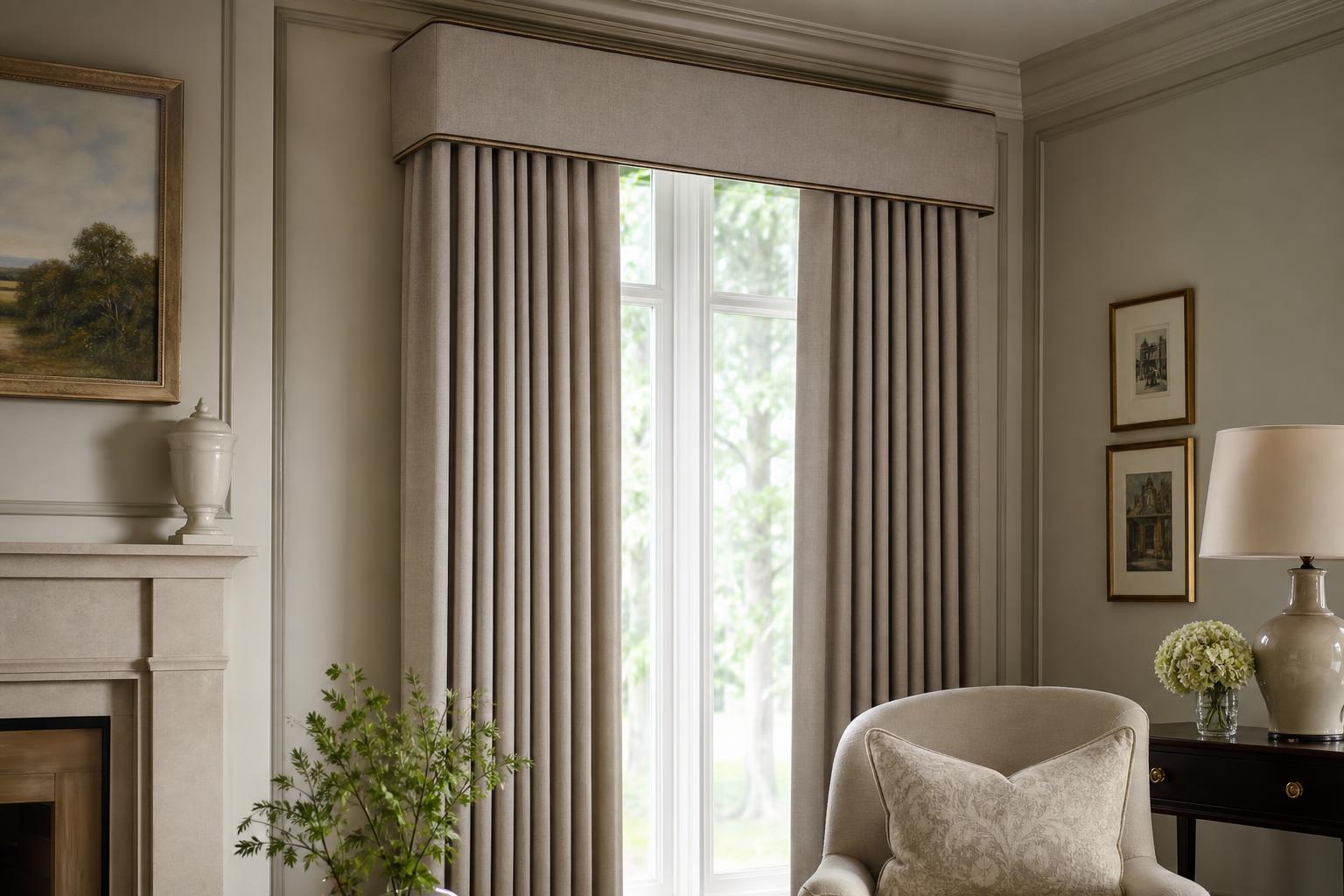
The small finishing details on soft furnishings create either coordination or discord depending on how they are specified. Trim details include banding on drapery edges, decorative welt on pillows, piping on upholstery, cording on cushions, and fringe on any soft good where fringe is appropriate.
A room where the drapery uses a decorative banding that repeats on the pillow welt creates a visible thread of coordination that ties the room together. A room where every trim decision was made independently looks unrelated even when the fabric palette was thoughtful.
The discipline is to treat trim decisions as palette-level decisions, not individual specification decisions. When the palette is established, trim choices for each fabric application are also established. This might mean a single contrasting color appears on drapery leading edges, pillow welt, and chair piping. It might mean a specific fringe detail appears on bed skirt and chair skirt but nowhere else.
Designers who think about trim coordination in advance produce rooms that feel finished. Designers who add trim decisions as afterthoughts produce rooms that feel close but not quite there.
Consider Light and Reflection Across Fabric Types
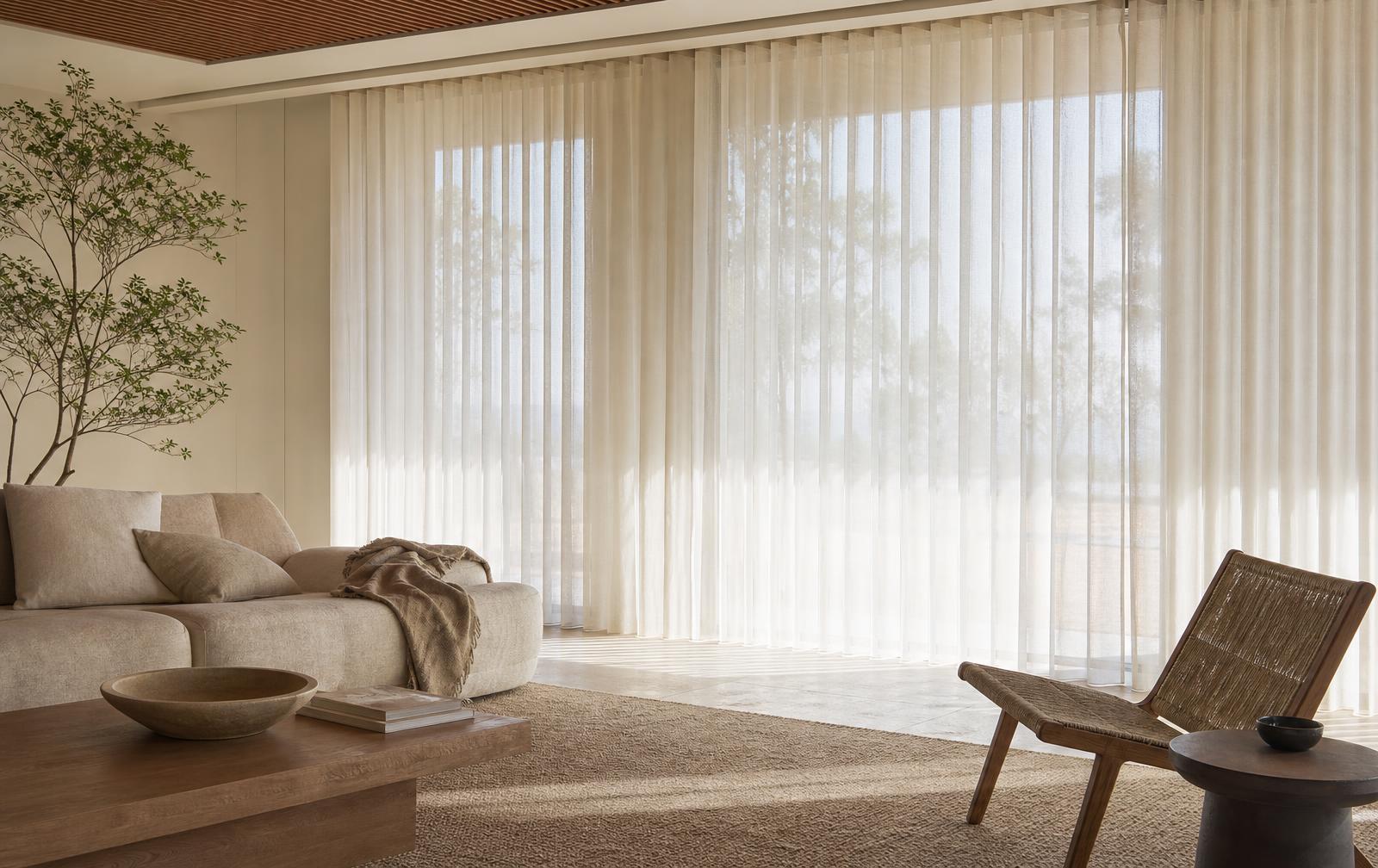
Different fabric types respond to light differently. Silks reflect light and show every variation in surface texture. Heavy velvets absorb light and create depth. Linens have a matte surface that reads as casual and natural. Printed cottons sit somewhere in the middle.
A room where the drapery is silk and the upholstery is velvet reads as rich and layered because the two fabrics respond to light in complementary ways. A room where every fabric has the same light behavior reads as flat.
Coordinated specifications use light behavior as a design dimension alongside color and pattern. The palette logic might identify one light-reflective fabric, one light-absorbing fabric, and one matte fabric, assigned to different applications. The resulting room has visual depth that a single-light-behavior palette cannot achieve.
Integrate Window Treatments with Bedding Specifications
Bedrooms are the most concentrated opportunity for soft furnishing coordination. The bed occupies most of the room''s visual weight. Bedding, pillows, shams, bed skirts, and headboard upholstery all sit within inches of each other. Add the window treatments and the bedroom has more soft surfaces per square foot than any other room in the house.
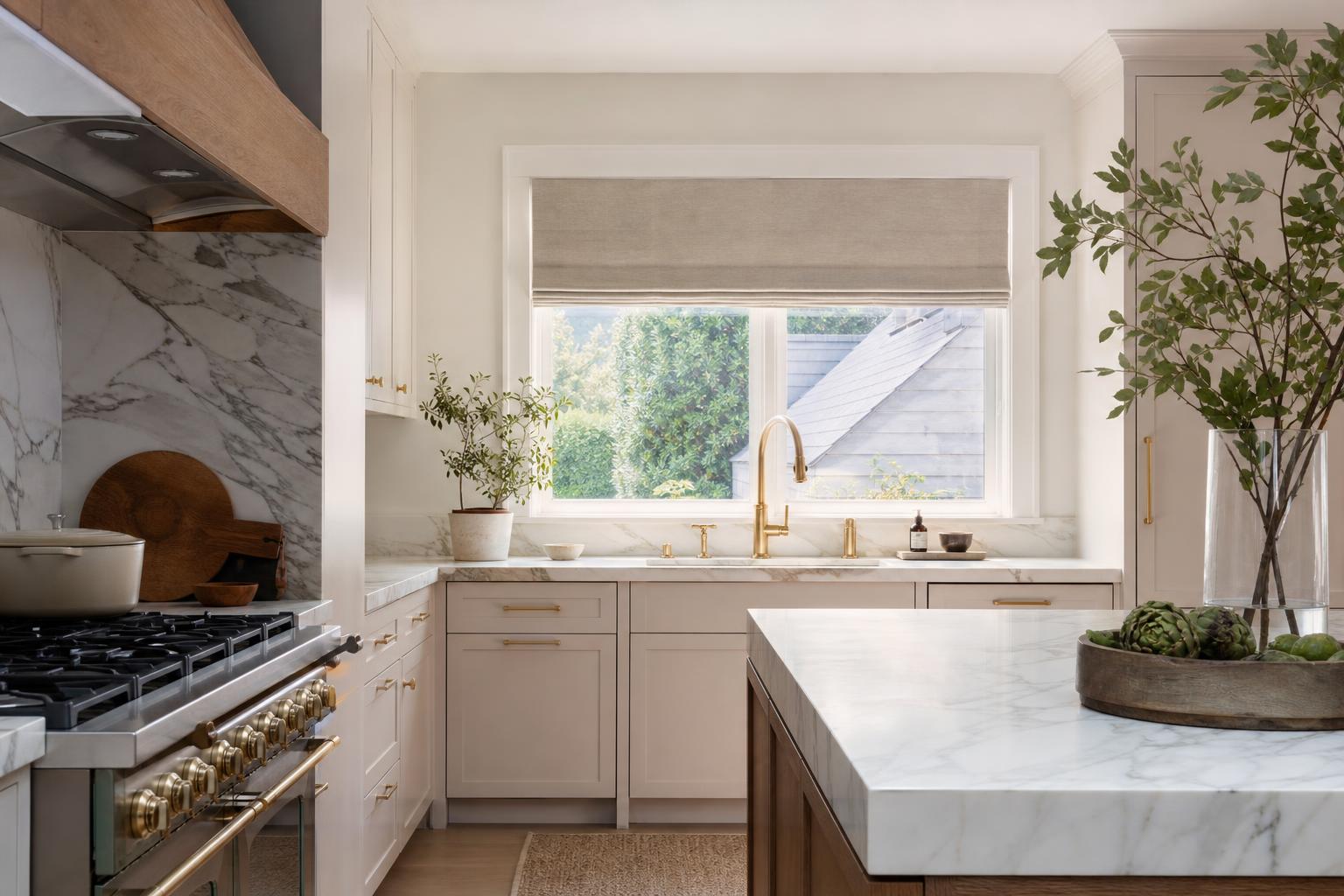
Coordinating bedding with window treatments requires explicit palette decisions about which fabrics appear where. A common framework is to use the dominant palette fabric on the duvet cover and the drapery, a supporting fabric on the shams and the roman shade, and an accent fabric on the pillows and nowhere else. For roman shade specification within a bedroom palette, see Custom Roman Shades: The Designer''s Complete Fabrication Guide.
Construction coordination matters especially for bedding because bedding is handled daily. A duvet cover fabricated at workroom quality with proper closures, finished seams, and appropriate weight holds up to daily use better than a retail duvet cover that was selected for price point rather than construction.
Roseworks fabricates custom bedding and pillows alongside window treatment scope for residential bedrooms. Duvet covers, shams, bed skirts, and custom pillows are specified and constructed within the same workroom process as drapery and roman shades. The bedroom becomes a single coordinated fabrication scope rather than a multi-vendor assembly.
Extend Coordination to Upholstery
Upholstery is often treated as a separate category from window treatments and soft goods because upholstered furniture pieces are typically sourced from furniture manufacturers. But custom upholstery, reupholstery, and custom-built upholstered pieces can move through the same workroom as drapery and roman shades.
A sofa reupholstered in the palette fabric extends the room''s coordination logic into a surface that would otherwise fall outside the scope. A pair of dining chairs upholstered in a complementary fabric ties the dining area to the adjacent living room. A custom upholstered headboard anchors the bedroom palette.
Roseworks offers custom upholstery services that integrate with window treatment scope for trade professionals working on comprehensive residential projects. This integration creates the fullest coordination opportunity for projects where the designer is specifying across the entire soft furnishing scope.
Working with a Single Workroom Simplifies Coordination
Every coordination practice described in this playbook becomes easier when the soft furnishings move through a single workroom rather than a collection of specialized providers.
The palette document stays with the workroom throughout the project. Construction standards are consistent across all fabricated pieces. Trim decisions are executed by the same hands. Scheduling is coordinated across all scope. Quality control standards are unified.
For designers working on premium residential projects where coordinated soft furnishings are a core deliverable, consolidating fabrication at a single workroom is the operational approach that makes the design vision achievable. Roseworks Fabrication is structured to serve this consolidated scope for Colorado-based trade professionals.
To explore coordinated soft furnishing fabrication for your next project, contact Roseworks to discuss scope and timeline. For specific details on custom pillows, bedding, and upholstery, review Beyond the Window: Custom Pillows, Bedding, and Upholstery for Complete Interior Projects. For upholstery decisions specifically, see Custom Upholstery Services: When to Restore vs. Replace.
Coordinated soft furnishings, fabricated under one workroom.
Roseworks Fabrication consolidates drapery, roman shades, pillows, bedding, and upholstery into a single coordinated fabrication scope. Contact the workroom to discuss your next project.
Related project showcases: See coordinated soft furnishings in finished projects: the Highland Park bedroom with custom bedding and the Telluride mountain retreat with full soft goods scope.