Understanding Pleat Styles: A Trade Professional's Reference Guide
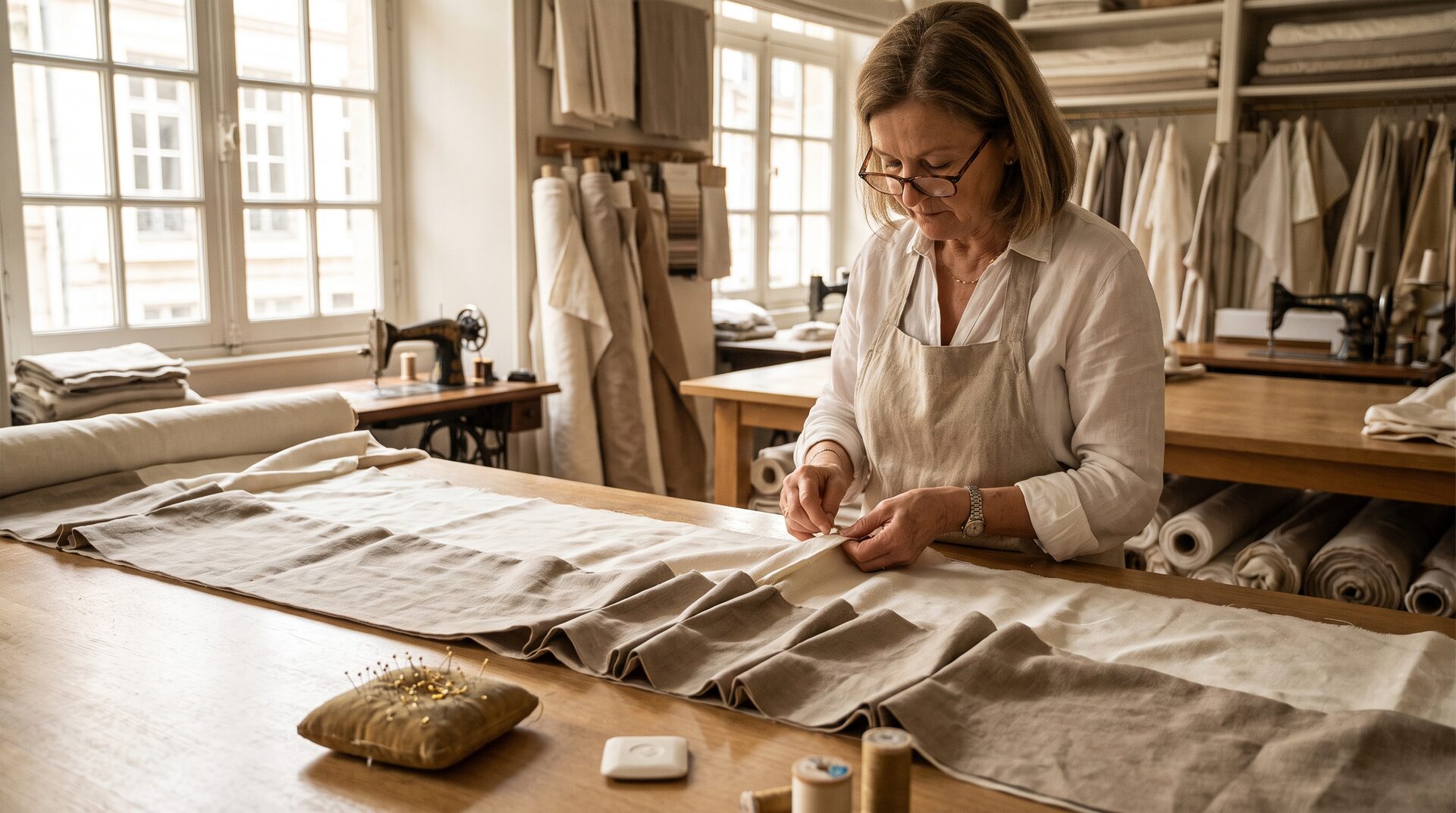
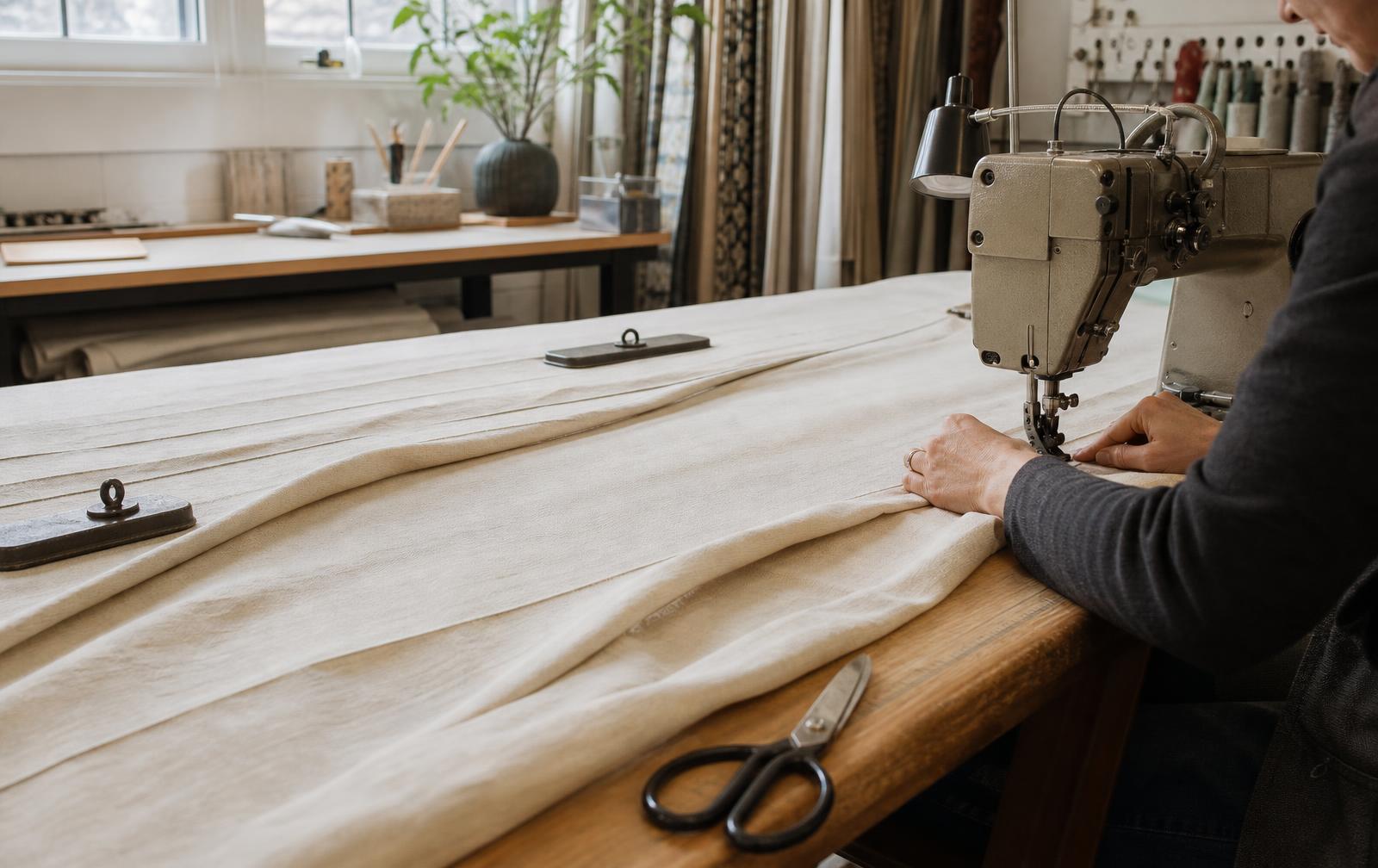
Pleat style is one of the most important specification decisions in any custom drapery project. It determines the visual character of the finished treatment, affects fabric requirements, dictates hardware compatibility, and influences how panels stack when opened.
This guide is designed as a quick-reference resource for interior designers, architects, and trade professionals working with Roseworks Fabrication. For each pleat style, we cover the construction method, best applications, fabric considerations, and compatible hardware.
Two-Finger Pinch Pleat
Construction: Two points of fabric are joined approximately three inches below the header, creating a compact pleat with moderate fullness.
Best for: Formal but not fussy spaces. Creates vertical structure without heavy volume. Works in both traditional and contemporary settings.
Fabric considerations: Performs well with medium-weight fabrics. Lighter fabrics may not hold the pleat shape as crisply.
Hardware: Rings, pins, or traversing rod. Compatible with most decorative hardware collections.
Three-Finger Pinch Pleat
Construction: Three points joined at the header, creating fuller, more voluminous pleats than two-finger.
Best for: Traditional and transitional interiors where presence and formality matter. Large windows and high ceilings.
Fabric considerations: Works best with medium to heavy fabrics that can support the volume. Interlining recommended for maximum body.
Hardware: Rings, pins, or traversing rod. All Roseworks hardware collections are compatible.
French Pleat
Construction: Similar to pinch pleat but with pleats joined at the front of the fabric, creating a cleaner, more tailored finish.
Best for: Contemporary classic interiors. One of the most commonly specified styles by Denver designers.
Fabric considerations: Versatile across fabric weights. Light to medium fabrics create an elegant, less structured look.
Hardware: Rings or pins. Works well with both decorative poles and simple tracks.
Goblet Pleat
Construction: The top of each pleat is stuffed to create a tulip or goblet shape. Sculptural and formal.
Best for: Formal dining rooms, living rooms, and any space where drapery is a design focal point.
Fabric considerations: Requires medium to heavy fabric to hold the goblet form. Interlining strongly recommended.
Hardware: Stationary mounting preferred (rings on poles). Not ideal for daily traversing.
Cartridge Pleat
Construction: Smooth cylindrical folds created by shaping fabric around a roll of interlining. Crisp and architectural.
Best for: Modern and minimalist interiors where clean geometry is the priority.
Fabric considerations: Works with structured, medium-weight fabrics. Avoid very soft or drapey materials.
Hardware: Rings on poles or concealed track. Stationary or traversing.
Inverted Pleat
Construction: Fullness is folded behind the face fabric, creating a flat front with hidden volume.
Best for: Contemporary spaces, built-in window seats, and applications where a flat-front panel is desired.
Fabric considerations: Works across fabric weights. Heavier fabrics create a more pronounced fold behind.
Hardware: Track systems preferred. Also works with rings on minimal poles.
Ripple Fold
Construction: Continuous wave of fabric running on a track system. Uniform fold spacing (typically 3" or 4").
Best for: Modern, minimal, and commercial interiors. Floor-to-ceiling applications. Motorized installations.
Fabric considerations: Best with light to medium-weight fabrics that drape smoothly. Avoid stiff or heavily textured materials.
Hardware: Requires a compatible track system (not poles). Integrates seamlessly with motorized tracks.
See all pleat styles in our Custom Drapery gallery.
For guidance on how to write a complete drapery specification, see: How to Specify Custom Drapery for Your Client's Project.
Ready to place an order? Contact our workroom team or download our drapery order form.