Interlined Drapery for Colorado Winters: How Designers Should Specify Thermal, Blackout, and Interlining
Short answer: For Colorado winter rooms, specify interlining when the client wants warmth at cold glass, a fuller drape, and longer fabric life. Choose thermal lining when budget or stack space is tight, and blackout lining when darkness is the priority. Each option changes stack back, hardware load, and yardage, so decide before hardware is quoted. Interlined orders released in early November can still target a December install.
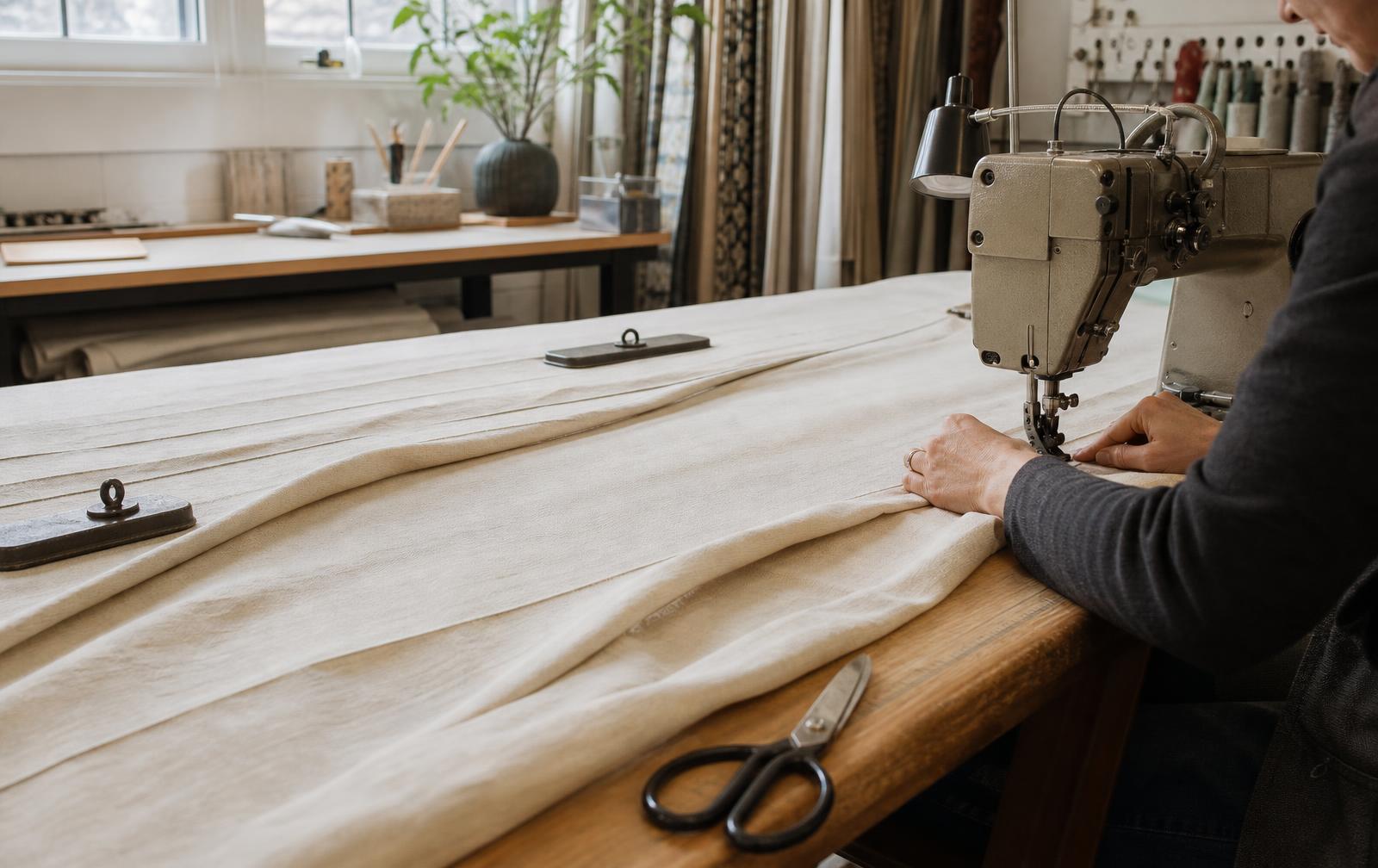
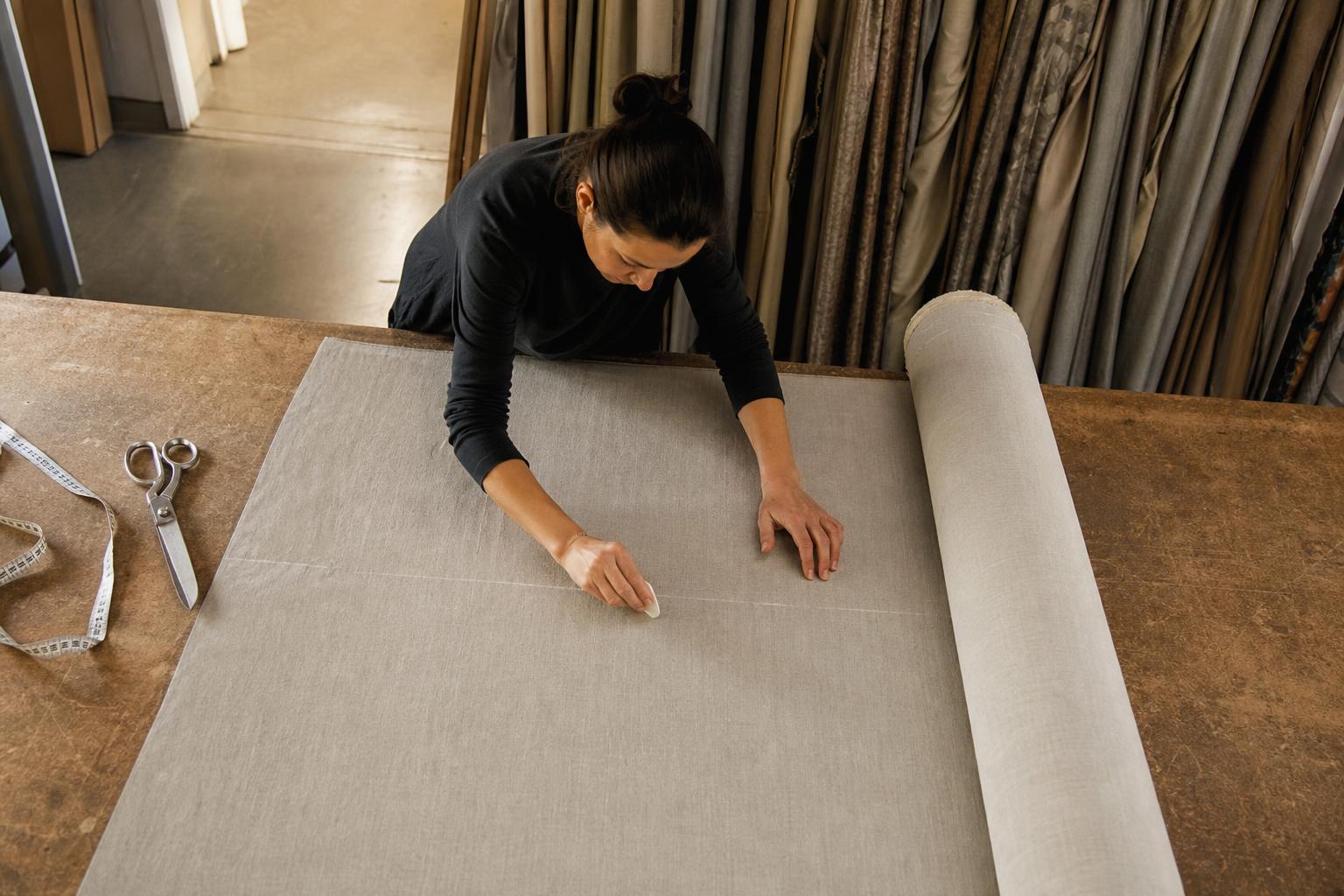
The first cold snap always brings the same client comment: the room is beautiful, but it feels cold by the window. Lining is where that problem gets solved, and it is also where specifications most often go vague. "Lined" on an order can mean five different constructions. This guide is the version we would walk a designer through at the cutting table at our Westminster workroom. For the full fabrication picture, start with our custom drapery specification guide.
What is drapery interlining and how is it different from lining?
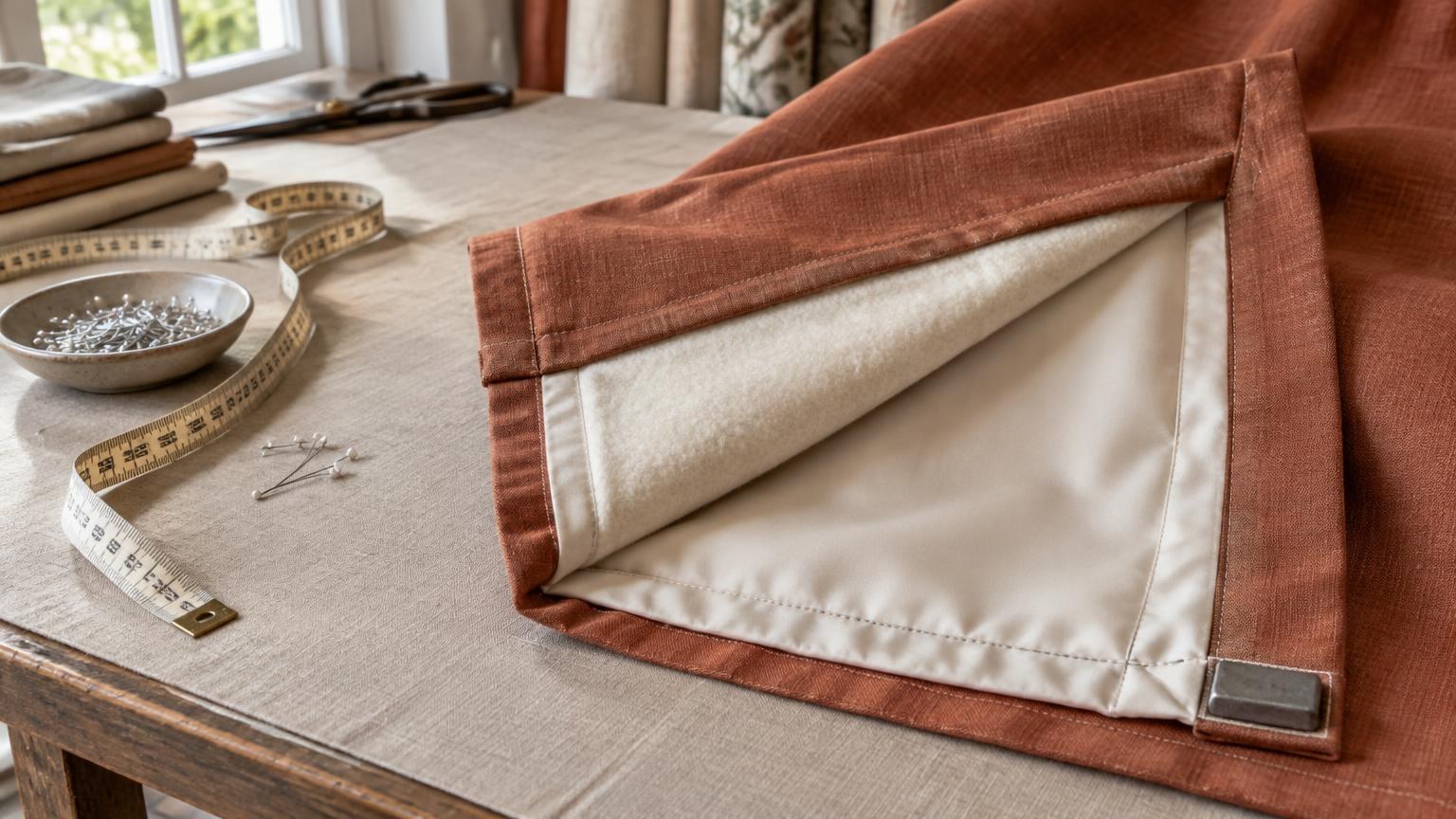
Interlining is a soft middle layer sewn between the face fabric and the lining so all three hang as one panel. Lining is the back layer that faces the window. Interlining adds body, insulation, and light blocking, and it protects the face fabric. Lining alone protects and finishes the panel but adds far less warmth or weight.
Interlinings come in a range of weights. Heavy napped cotton interlining, often called bump, gives the most warmth and the richest drape. Lighter cotton flannel or domette adds body without as much bulk. Synthetic interlinings are lighter still and resist moisture. The right weight depends on the face fabric, the pleat style, and how much stack space the window allows.
Done well, interlining is invisible. The client never sees it. They simply notice that the panel hangs heavier, falls in deeper folds, and makes the room feel calmer and warmer after dark.
Thermal lining, blackout lining, or interlining: which should you specify?
Choose by the room's main job. Interlining is the strongest choice for warmth and drape in living and dining rooms. Blackout lining is the choice for bedrooms where darkness matters more than hand. Thermal lining is the practical middle ground. For the most demanding rooms, interlining and blackout lining can be combined in one panel.
| Option | Construction | Winter comfort | Light control | Drape and stack | Best fit |
|---|---|---|---|---|---|
| Standard lining | Face plus cotton or poly lining | Modest | Filtered | Lightest, slimmest stack | Rooms where light and movement matter more than warmth |
| Thermal lining | Face plus coated or insulated lining | Good | Room darkening on most fabrics | Slightly stiffer hand, modest stack | Budget-conscious projects and tight stack space |
| Blackout lining | Face plus multi-pass blackout lining | Good | Darkest, with edge gaps managed | Firmer hand, moderate stack | Primary bedrooms, media rooms, nurseries |
| Interlined | Face, interlining, and lining sewn as one | Best | Strong room darkening | Fullest drape, widest stack, heaviest | Living rooms, dining rooms, silk and linen face fabrics |
| Interlined with blackout | Face, interlining, and blackout lining | Best | Darkest | Heaviest, widest stack | Bedrooms with cold glass and delicate face fabric |
One honest caveat about blackout: light leaks at the edges, not through the fabric. Returns to the wall, a center overlap, and a header that sits close to the ceiling or a board mount do more for true darkness than the lining alone. Our blackout vs room darkening guide covers the details.
How much warmth does interlining actually add at a cold window?
Interlining adds a still layer of air and fiber between the room and the glass, which reduces the chill people feel near a window after dark. How much it helps depends on coverage. A closed, interlined panel with returns to the wall, generous fullness, and floor-length hems outperforms the same fabric with gaps at the sides and top.
We avoid promising clients a number on their heating bill, and we suggest designers do the same. What interlining reliably delivers is comfort: the seat by the window stops feeling drafty, and the room holds its warmth better in the evening. Coverage is what makes it work:
- Returns: wrap the panel back to the wall so cold air cannot slip around the side.
- Center overlap: overlap meeting panels on a traverse or track rather than letting them butt together.
- Length: a hem that kisses or breaks on the floor blocks the cold air that falls down the glass. A puddle does more, at the cost of upkeep.
- Top: a board mount, cornice, or ceiling-height header limits air movement over the top of the rod.
How does interlining change stack back, hardware, and yardage?
Interlined panels stack wider, weigh more, and need their own yardage line. Plan rod extension, bracket spacing, and wall blocking for the finished weight, and confirm motor ratings on motorized tracks. Decide on interlining before hardware is quoted, because changing it later can change the rod, the brackets, and the stack plan.
Stack back. A thicker panel takes more wall space when open. If the stack has to clear the glass, extend the rod farther past the window or reduce fullness slightly. We calculate stack per fabric on the order so there are no surprises at install.
Hardware load. Heavier panels need more support. That can mean a larger rod diameter, more brackets, closer spacing, and solid blocking behind drywall. On long spans and window walls, plan this early. Our window wall fabrication guide and drapery hardware page cover the options.
Motorization. Every motorized track has a weight rating. Interlined panels on wide openings can approach it quickly. Share finished dimensions and fabric weight before the track is ordered. See our motorized drapery track guide.
Pleat style. Interlining flatters tailored headers like French pleats, goblet pleats, and inverted pleats. Ripplefold drapery usually performs best with lighter linings, so talk with us before interlining a ripplefold program.
Yardage. Interlining and lining are cut to the same lengths as the face fabric, so they appear as their own lines on the estimate. For COM orders, calculate face yardage as usual and confirm with us which linings and interlinings are stocked at the workroom. Our yardage estimating guide walks through repeats and cut lengths.
Can Roman shades be interlined?
Yes. Interlining gives a Roman shade richer folds, better insulation, and more protection for the face fabric. The tradeoff is a deeper stack at the top of the window and added weight on the lift system. Confirm head clearance above the glass and the shade width limits for the chosen fabric before you specify it.
Flat Romans show interlining most clearly, because each fold reads as a soft, padded band. Soft fold and relaxed styles gain depth and stack taller. Compare styles in our Roman shade styles guide and see construction options on our custom Roman shades page.
Which face fabrics benefit most from interlining in a high-altitude climate?
Silk and linen benefit the most. Interlining gives silk body and shields it from intense Colorado sun. It helps linen hang heavier and more evenly in dry air. Velvets and heavy wools often have enough body with lining alone. Sheers should not be interlined at all.
For sun-facing windows, interlining does double duty: winter warmth and summer fabric protection. That pairing is explained in our guide to UV fade protection at altitude. For linen specifically, see specifying linen in a dry climate, and browse fabric guidance on our fabrics page.
What winter details should be written on the order?
Write every layer and every coverage detail on the order. "Lined" is not a specification. Name the lining, the interlining, returns, overlap, hem length, and mounting, plus the hardware plan for the finished weight. A complete order fabricates faster and installs without surprises.
- Lining type: standard, thermal, or blackout
- Interlining: yes or no, and weight if you have a preference
- Returns to wall and center overlap
- Finished length: float, kiss, break, or puddle
- Header and mounting: ceiling height, wall mount, board mount, or under a cornice
- Pleat style and fullness
- Hardware: rod or track, bracket count, and blocking confirmed
- Motor and weight rating, if motorized
- Projection off very cold glass, so panels do not rest against the window and trap moisture
Can interlined drapery still install before the holidays?
Yes, for many projects, if the order is released in early November with complete specifications. That is the cutoff for December installs on most custom work. Interlined panels add fabric handling, so earlier is better, and anything released later should plan for January.
When the calendar is tight, phase the work. Finish the living room and dining room where guests gather, and schedule bedrooms and offices for January. Our fourth quarter production calendar lays out the dates, and rush jobs and real lead times covers what is possible when a date cannot move. For client conversations, see managing client expectations on timelines.
Frequently asked questions
Is interlining worth the cost for Colorado homes?
For living and dining rooms with large windows, usually yes. Interlining improves comfort near cold glass, gives a richer drape, and extends the life of silk and linen in strong sun. In rooms where light and movement matter more than warmth, standard or thermal lining is often enough.
What is the difference between thermal lining and interlining?
Thermal lining is a single insulated back layer. Interlining is a separate soft layer sewn between the face fabric and the lining. Interlining adds more warmth, weight, and drape, while thermal lining is lighter, slimmer in the stack, and more economical.
Does blackout lining keep a room warmer than thermal lining?
Blackout and thermal linings perform similarly for warmth. Blackout is chosen for darkness. For the most warmth, interline the panel, and add blackout lining as well if the room also needs darkness.
Can interlining be added to existing drapery?
Sometimes, but it means opening the panel, adding the layer, and rebuilding the hems and header. Depending on the condition of the fabric, a remake can be the better value. Bring the panels to the workroom and we will evaluate them.
Will interlined drapery work on a motorized track?
Yes, as long as the track and motor are rated for the finished weight and width. Share panel dimensions and fabric weight before the track is ordered so the system is sized correctly.
How far ahead should I order interlined drapery for a December install?
Release the order with complete specifications in early November for most December installs. Fabric arrival drives the schedule, so confirm stock on the face fabric first. Orders released later should plan for January.
Specifying winter drapery this season? Send the room list and fabric selections and we will review lining, stack, and hardware before anything is cut. Explore the Roseworks trade program, apply for a trade account, or contact the workroom to reserve December production.