Custom Cornice Boards in Denver: How Designers Specify Size, Padding and Returns
Short answer: To specify custom cornice boards in Denver, give your workroom the finished width, face height, return depth, mount location, fabric and trim, and note what treatment sits underneath. Clear numbers for clearance over shades or drapery are what keep a cornice looking tailored instead of crowded.
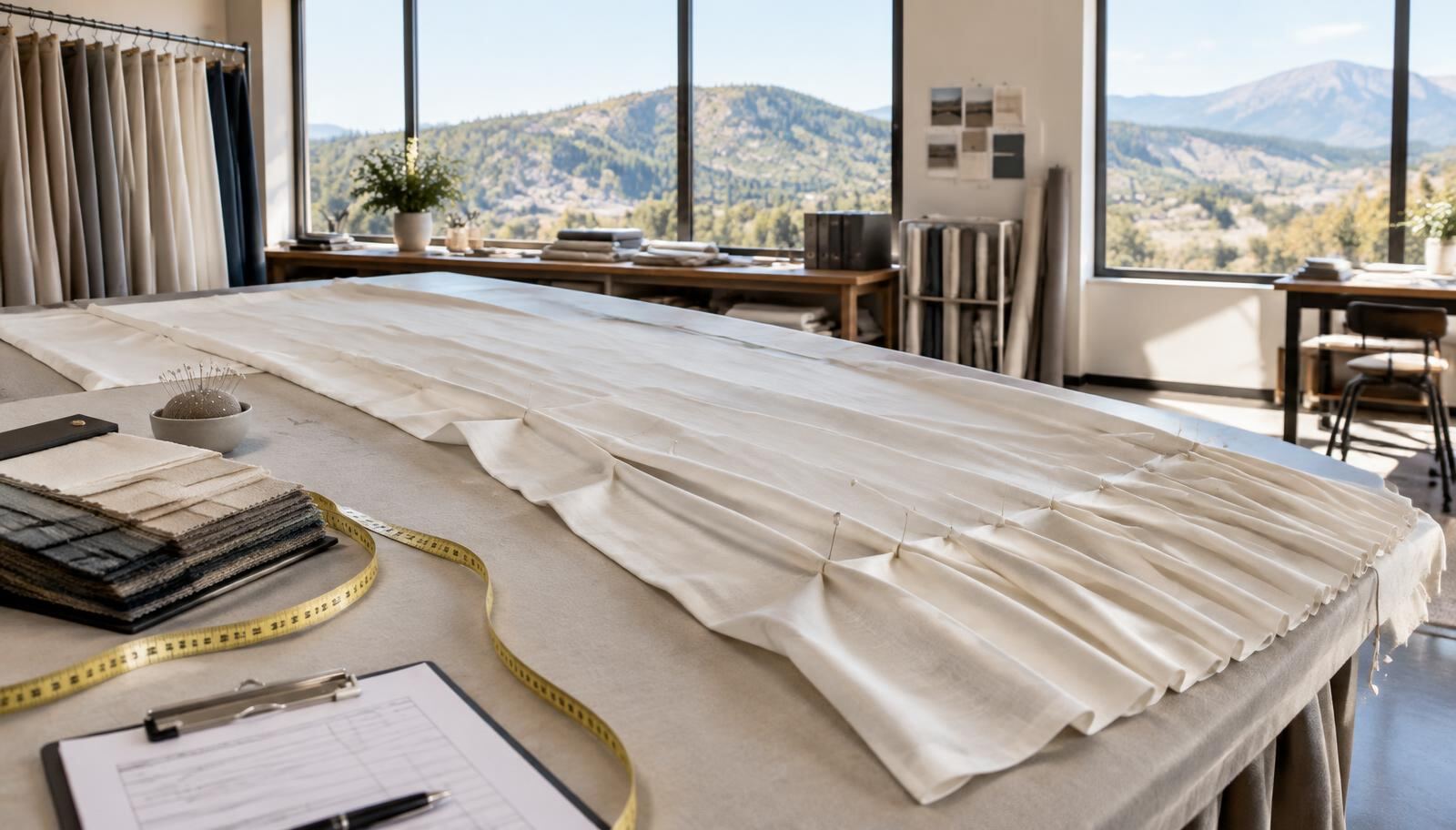
Roseworks Fabrication is a trade-only workroom in Westminster, Colorado, building cornices and valances for interior designers, architects and builders across the Denver metro. If you are still choosing a silhouette, start with our guide to window valance styles, then use this post to turn the chosen look into an order our valances and cornices team can fabricate.
What is a custom cornice board?
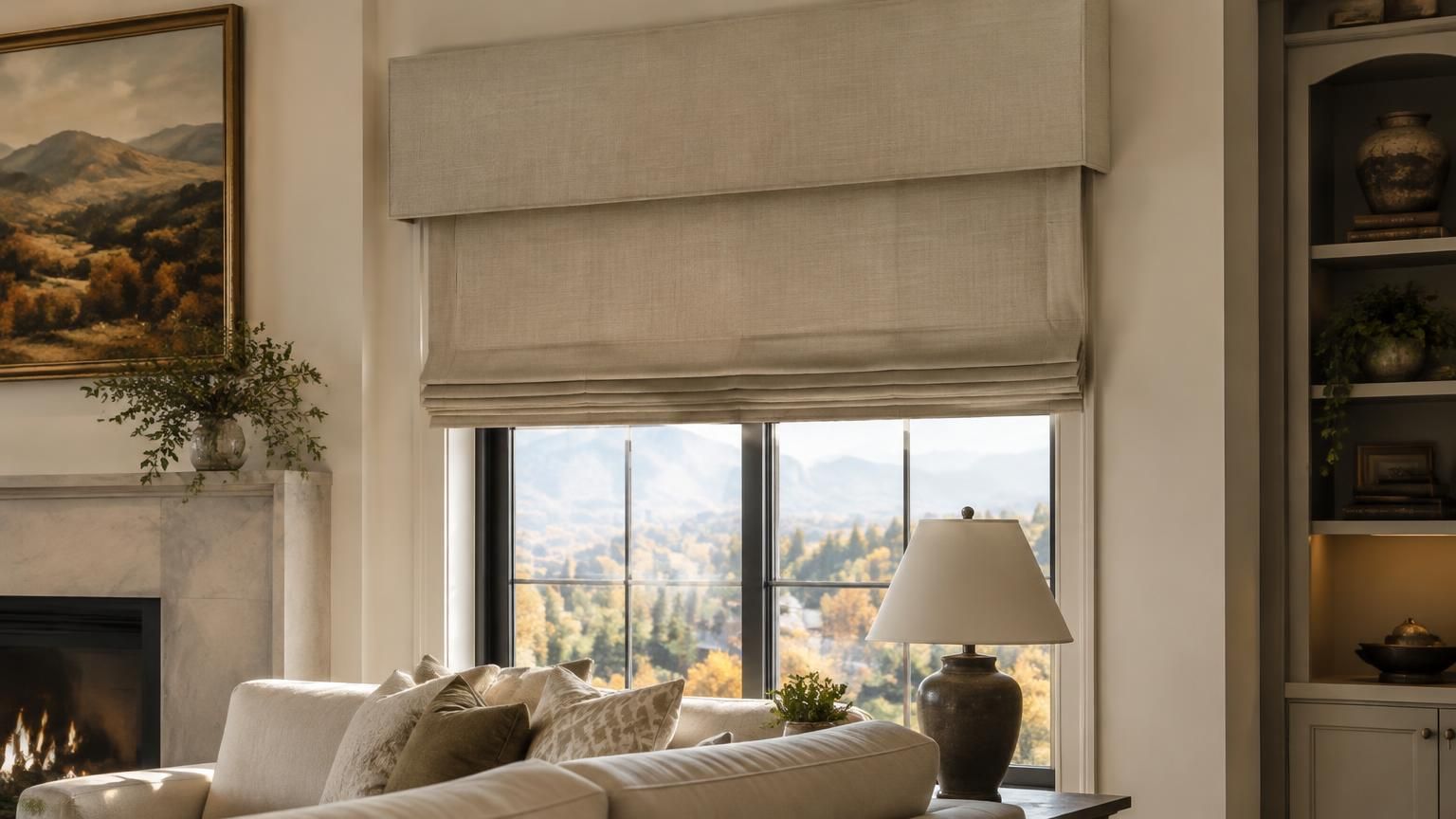
A custom cornice board is a rigid, box-shaped top treatment built on a wood frame, padded, and upholstered in fabric. It mounts above the window, hides headrails and drapery hardware, and gives the opening a crisp architectural line. Unlike a soft valance, a cornice holds its shape, so its proportions must be measured and specified exactly.
Designers use cornices to finish a Roman shade, frame stationary drapery panels, or add pattern at the top of a window without adding fabric that moves. Because the board is built to size in the workroom, small specification choices like return depth and padding weight show up clearly in the finished piece.
What measurements does a cornice order need?
A cornice order needs the finished outside width, the face height, the return depth on each side, the mount height, and the shape of the bottom edge. Add whether it mounts to the wall or ceiling and what sits beneath it. With those six items, the workroom can build the frame without guessing at proportions.
| Specification | What to provide | Why it matters |
|---|---|---|
| Finished width | Outside dimension of the face, including any overlap past the trim | Sets how much wall the cornice covers and whether drapery stacks can sit behind it |
| Face height | Height of the front panel at its tallest point | Controls proportion against the window and ceiling |
| Return depth | Distance from the wall to the face on each side | Must clear the shade stack or drapery hardware underneath |
| Mount location | Wall mount height or ceiling mount, plus blocking notes | Determines bracket type and installation method |
| Bottom edge | Straight, shaped, scalloped or custom profile with a sketch | Shaped edges need a template before cutting |
| Fabric and trim | Fabric name, repeat, railroading preference, welt or banding | Affects yardage, pattern placement and seam locations |
Our valance and cornice order form walks through each of these fields so nothing is left off the work order.
How deep should cornice returns be over shades or drapery?
Cornice returns should be deep enough to clear everything underneath with a little breathing room. Measure the projection of the shade headrail or drapery rod and finials, including the fabric stack, then add clearance so fabric does not rub. Shallow returns cause shades to drag and drapery to bunch against the inside of the board.
When a cornice sits over operating drapery, share the rod type and bracket projection with the workroom. Layered treatments, such as a sheer and a lined panel on a double rod, need noticeably deeper returns than a single inside mount Roman shade. If the hardware is not chosen yet, our drapery hardware finishes guide covers current options.
How much padding and what edge detail should you specify?
Specify padding by the look you want: light padding for a tailored, almost flat face, and heavier padding for a soft, rounded upholstered feel. Then choose the edge detail, such as self welt, contrast welt, banding or nailhead trim. Edge choices define the outline, so they should coordinate with nearby upholstery or drapery trim.
- Light padding suits modern rooms, linen and solid fabrics.
- Fuller padding suits traditional rooms, velvets and pattern that benefits from a soft crown.
- Self welt keeps the board quiet; contrast welt or banding draws the eye to the shape.
- Shaped bottom edges read best with welt or banding that follows the profile.
Which fabrics work best on upholstered cornices?
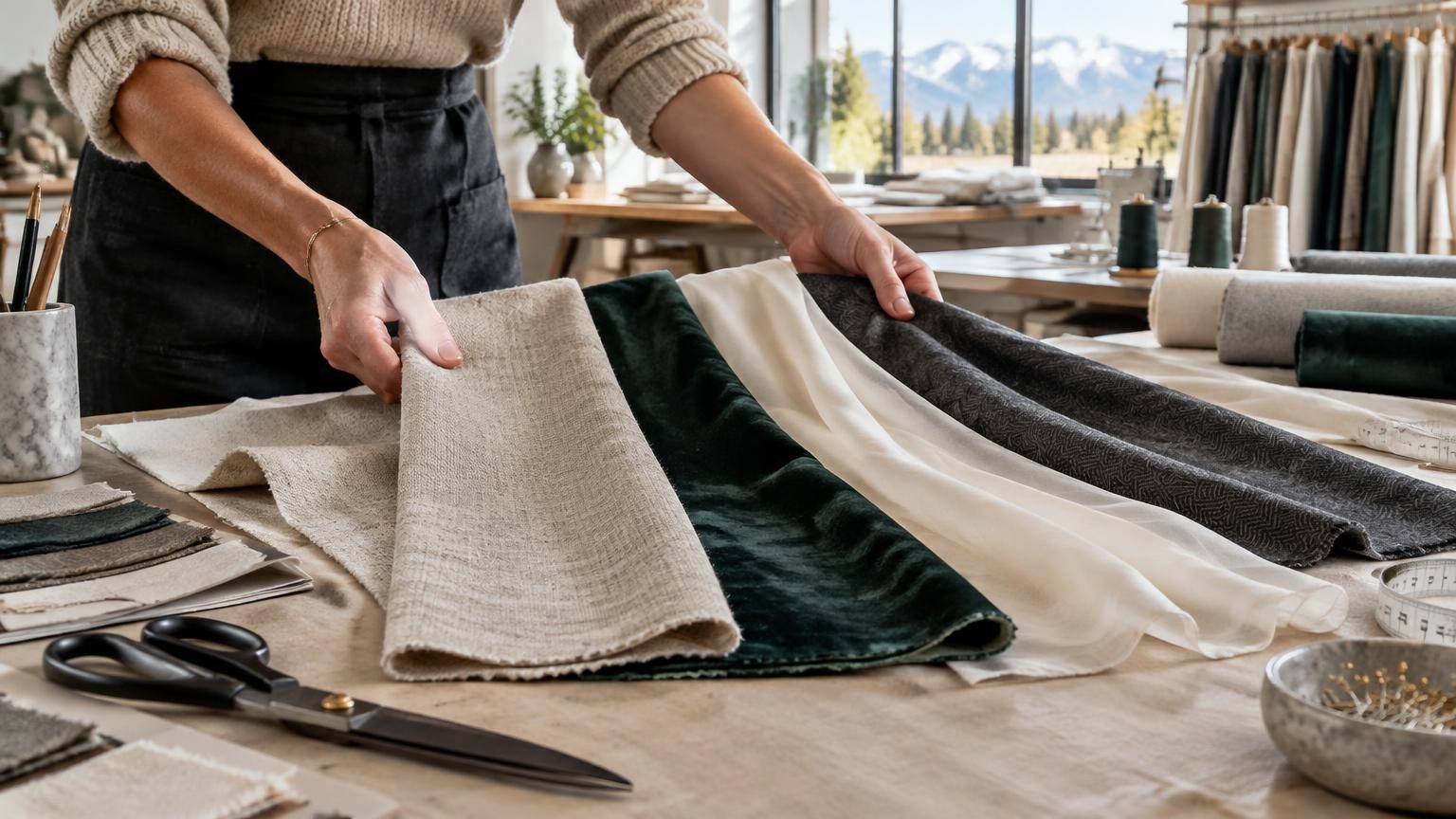
Medium weight, tightly woven fabrics work best on cornices because they wrap the frame smoothly and hold crisp corners. Linen blends, cotton, tightly woven velvets and many performance fabrics upholster well. Very sheer, loosely woven or highly stretchy fabrics can show padding texture or distort pattern, so request a sample review first.
Large pattern repeats need planning. Tell the workroom where the motif should center on the face and whether railroading is acceptable to avoid seams on wide boards. For more on choosing fabric that fabricates well, see our drapery fabric selection guide for designers. Customer's own material is welcome; our fabrics page explains how COM is handled.
Cornice or soft valance: which should you specify?
Specify a cornice when the room calls for structure, clean lines and complete concealment of hardware. Specify a soft valance when you want movement, gathers or pleats and a lighter feel. Both can layer over Roman shades or drapery. The deciding factors are room style, ceiling height and how much architectural weight the window should carry.
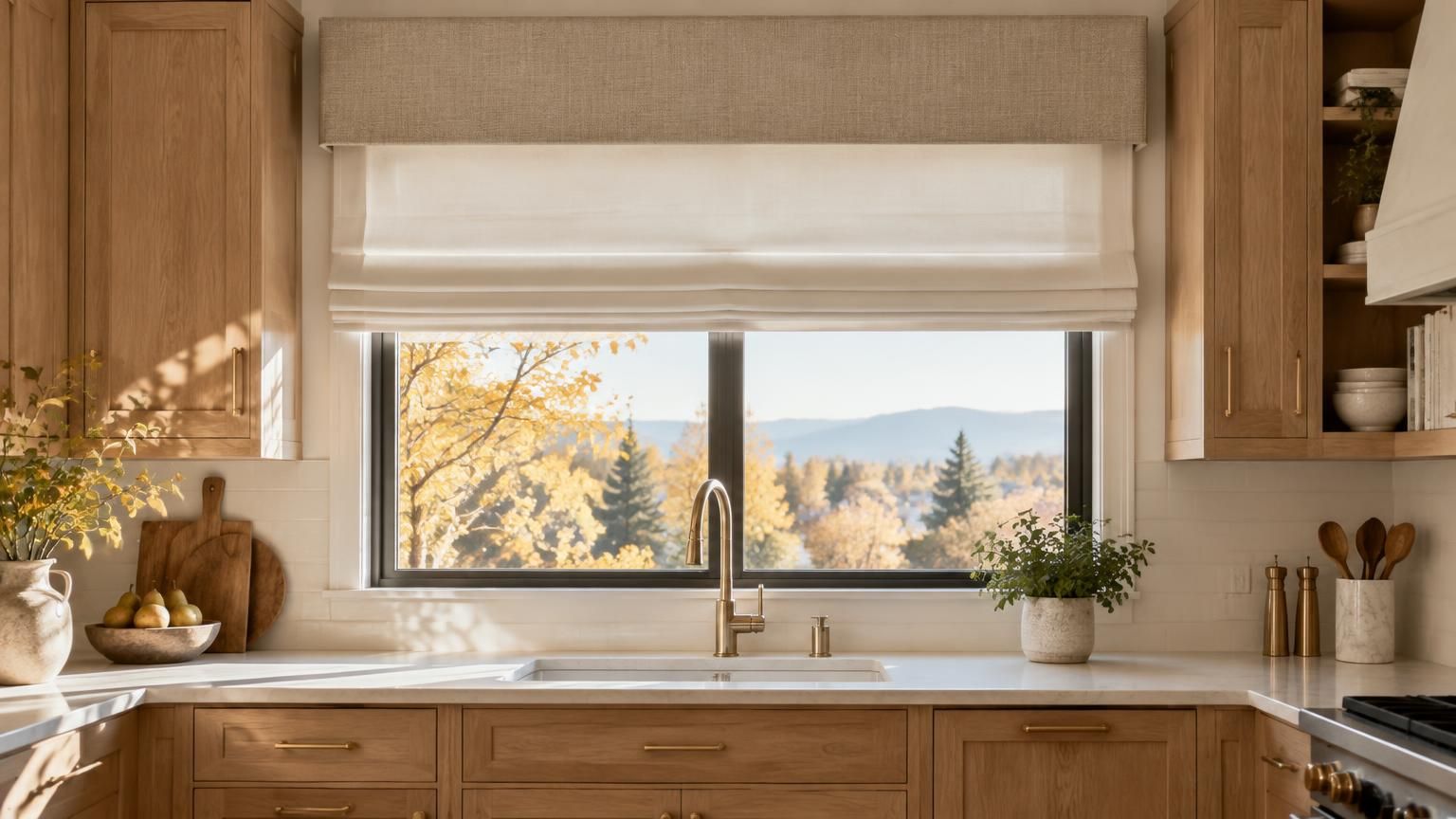
Kitchens are a common place for this choice. Our post on kitchen valances and cornices over Roman shades compares both in that setting, and the return of the upholstered cornice looks at why the style is back on designer spec sheets.
Cornice specification checklist
- Finished width, face height and return depth on each side
- Wall or ceiling mount, mount height and blocking notes
- Bottom edge profile, with a sketch or template for shaped designs
- Padding level and edge detail
- Fabric, repeat, pattern centering and railroading preference
- Treatment underneath and its hardware projection
- Sidemark, room name and install contact
Frequently asked questions
Are cornice boards still in style?
Yes. Tailored, upholstered cornices with clean edges are showing up in current designs, especially layered over Roman shades and stationary drapery panels.
Can a cornice hide drapery hardware?
Yes. Sizing the return depth and face height to cover the rod, brackets and fabric stack is one of the main reasons designers specify a cornice.
Can I send my own fabric for a cornice?
Yes. Roseworks accepts customer's own material. Share the fabric details with the order so yardage and pattern placement can be confirmed.
Do shaped cornices cost more than straight ones?
Shaped profiles usually involve more labor because they need a template and careful upholstery around curves. Request an estimate with your sketch for accurate pricing.
Can cornices be mounted on the ceiling?
Yes. Note a ceiling mount on the order so the frame and brackets are built for it, and confirm there is solid blocking where the cornice will attach.
Do you fabricate cornices for designers outside Denver?
Roseworks serves trade professionals across the Denver metro and Colorado from our Westminster workroom. Contact us to confirm details for projects farther away.
Ready to put a cornice on your next project? Open a Roseworks trade account to submit orders, or explore our custom valances and cornices service for construction options.