Drapery Fabric Selection Guide for Designers: Choosing Fabrics That Fabricate Well
Short answer: A drapery fabric selection guide for designers starts with how a textile behaves, not just its color. Review fiber, weight, hand, weave and lining together, then send a cutting and the intended specification to the workroom before committing to the order.
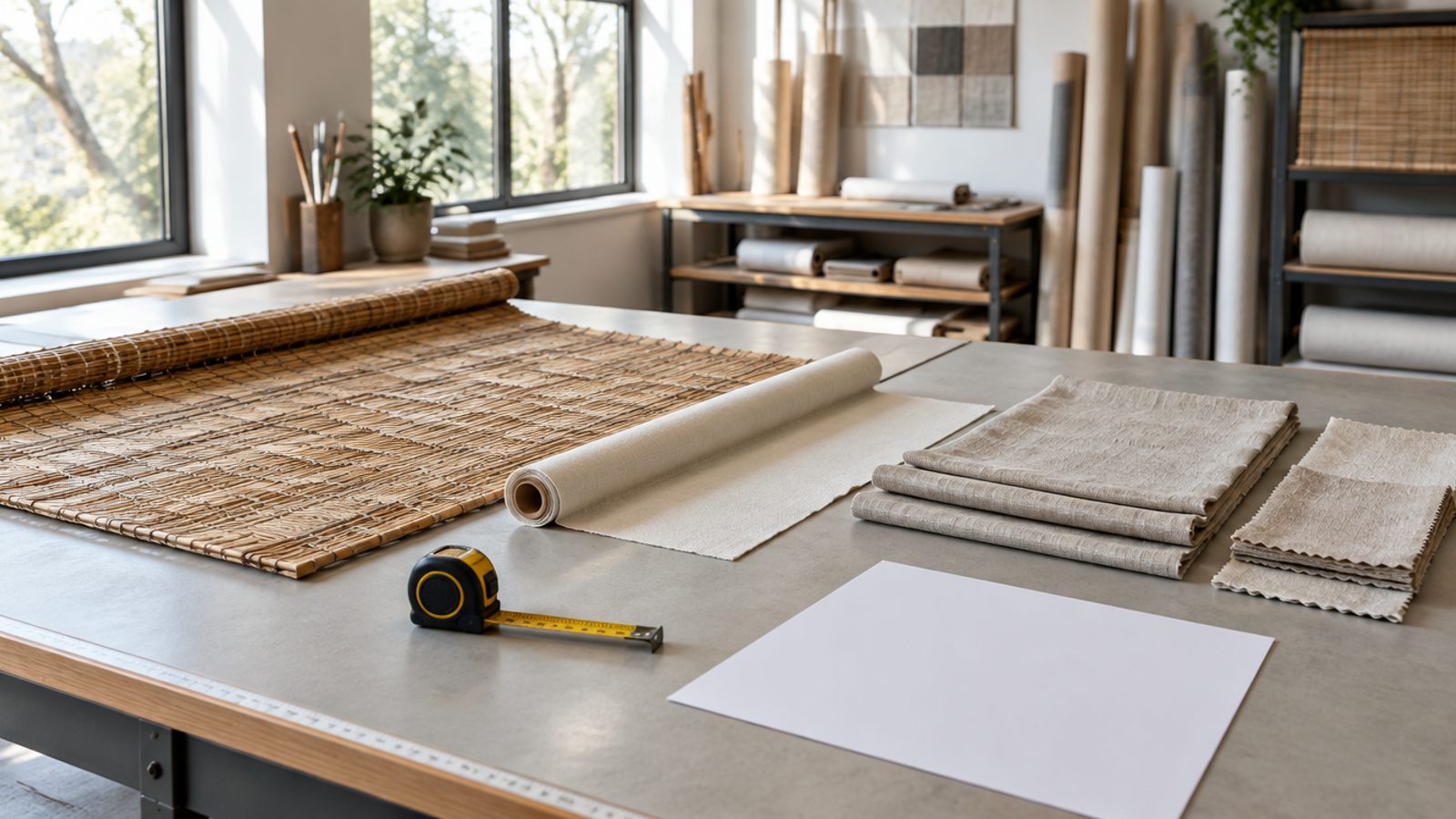
For early fall projects in the Denver metro, Roseworks Fabrication is a trade-only workroom in Westminster serving interior designers, architects and builders. Start with our fabric resources to frame the selection conversation. A memo can establish the palette, but a larger cutting helps reveal whether the cloth will form the folds, seams and stack your scheme requires.
How do fiber, weight, hand and weave affect drapery?
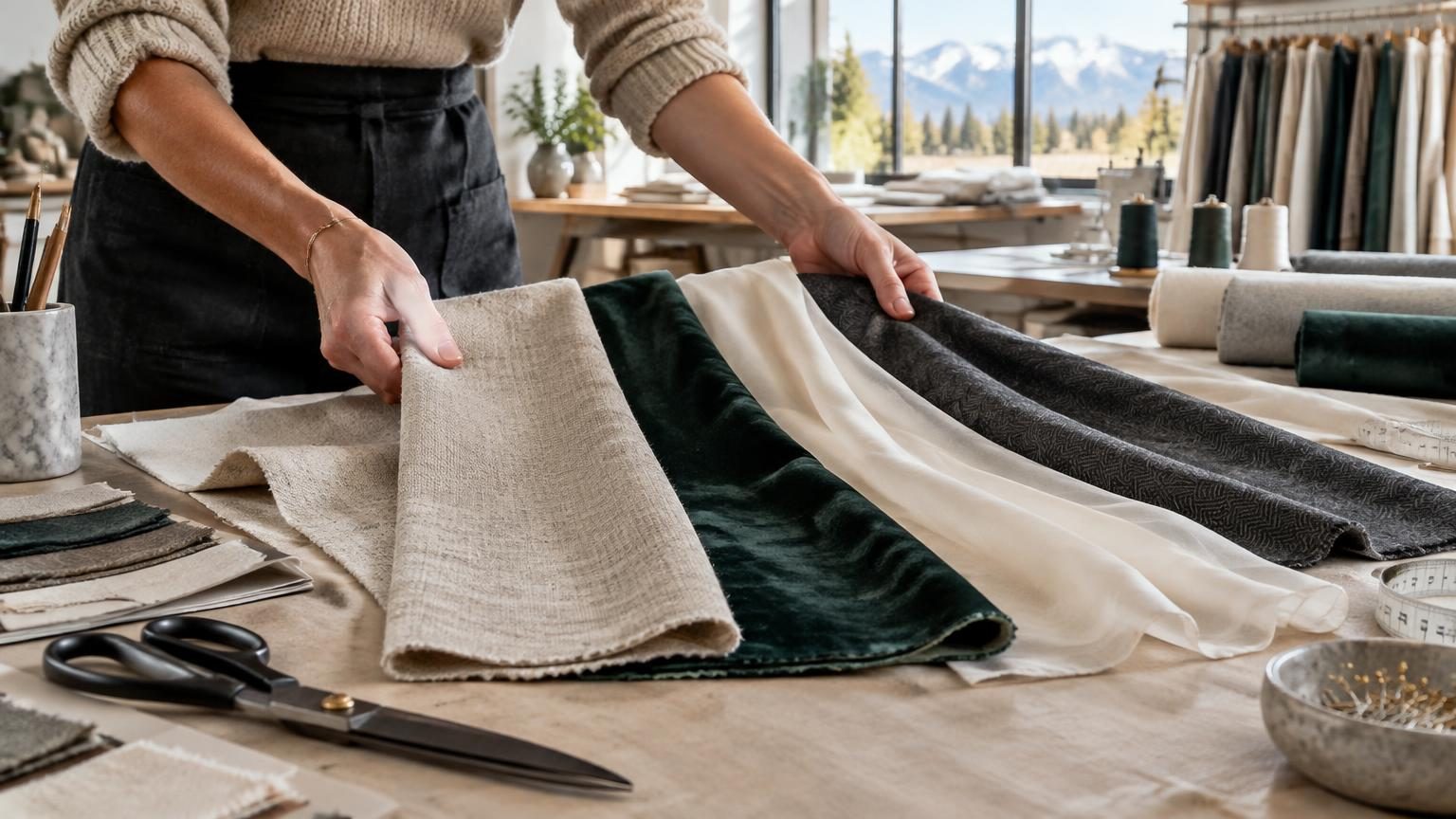
Fiber influences moisture response and care; weight affects load; hand describes softness or stiffness; weave shapes texture and stability. These qualities work together to determine how a panel hangs and gathers. Compare them on an actual cutting, because a soft-looking fabric may feel firm and resist a compact stack.
Linen offers an expressive fold, while velvet can create a fuller, more substantial silhouette. An open sheer may expose seams and hardware through the cloth. A wool blend can provide body without behaving like another fabric of similar weight. Hold the sample vertically, gather it gently and view it against daylight before choosing a heading.
Which fabric families suit different applications?
Fabric families offer a useful starting point, not a guarantee of performance. The actual weave, finish and backing matter as much as the fiber name. Use the comparison below to identify questions for the workroom, then evaluate the specific cloth with the intended treatment, heading and lining in mind.
| Fabric family | How it drapes | Best applications | Watch-outs |
|---|---|---|---|
| Linen and linen blends | Textured folds with a natural character | Relaxed panels and tailored drapery after sample review | Wrinkles, moisture response and weave irregularities |
| Velvet | Substantial folds with directional surface shading | Drapery where depth and fullness suit the scheme | Nap direction, bulk and hardware load |
| Sheers | Light folds with visible translucency | Layered daylight filtering and ripplefold treatments | Visible seams, transparency and stack allowance |
| Wool blends | Body and softness vary with construction | Structured panels or shades after suitability review | Thickness, care and folding behavior |
| Performance textiles | Varies by weave and treatment | Projects with documented maintenance requirements | Stiff finishes and application-specific performance claims |
What should designers check before sending COM?
Customer's own material needs a clear identity and a construction review before cutting. Send the fabric reference, a useful cutting, supplier specifications and the intended application. Confirm usable width, repeat, direction and visible condition with the workroom so the approved sample and delivered goods can be assessed against the same brief.
Record the face side and any nap or motif direction. Ask how flaws, color variation or a short delivery will be handled before production release. A memo does not establish the condition of the delivered roll. Keep quantity calculations separate from fabric suitability; use the drapery yardage estimating guide for that discussion rather than guessing from nominal width.
How should linings and interlinings be selected?
Lining changes the way a panel filters light, presents at the window and feels in operation. Interlining adds another layer of body and can change the fold and stack. Choose the complete assembly against the desired appearance and hardware capacity rather than selecting each layer independently from its sample alone.
Review a layered sample where opacity, texture or bulk is important. A blackout lining does not eliminate light around the treatment perimeter. A sheer may intentionally remain unlined. Check care compatibility and tell the workroom whether panels will traverse or stay stationary, because added layers affect both handling and available stack space.
When should fabric run railroaded or up the roll?
Up-the-roll construction generally uses the roll length for panel height; railroading turns the fabric so usable width runs in that direction. Neither orientation is automatically correct. The pattern, nap, weave and supplier instructions must support the proposed direction, and the usable width must suit the finished design before cutting begins.
Turning a fabric can change a stripe, motif or surface sheen. Ask whether seams remain necessary and where they will sit. Do not assume every wide textile can be railroaded or that eliminating a seam outweighs an unsuitable grain direction. Record the approved orientation on the specification so purchasing and fabrication follow the same decision.
How do Colorado sun and dry air affect fabric choices?
Strong sunlight can alter color and weaken exposed textiles, while dry indoor air can change how moisture-responsive fibers hang. Treat these as design conditions rather than promises of a particular result. Consider window orientation, protective layers and client expectations, then check the selected fabric's documented suitability and care guidance.
Our linen specification guide for dry climates explains why a precise floor relationship deserves discussion. For maintenance and material claims, see performance and recycled textile considerations. No generic label means a cloth will remain unchanged in every exposure.
Which fabrics suit Roman shades rather than drapery?
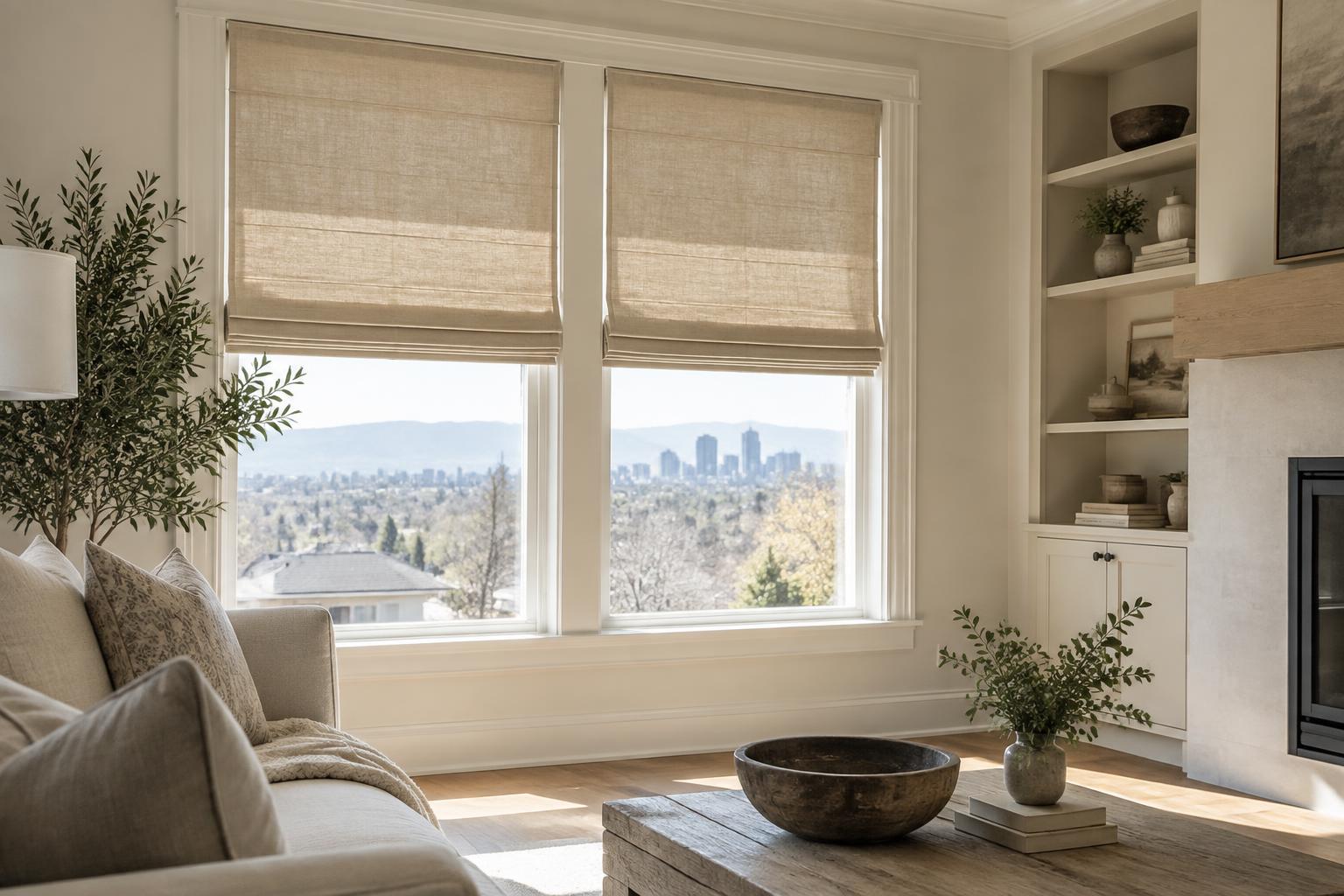
Roman shades need cloth that supports repeated folding and the selected construction, while drapery needs cloth that suits its heading, movement and stack. A textile can work for both, but suitability must be checked independently. Assess thickness, pattern placement and the lined assembly instead of transferring approval from one treatment to another.
Compare the product choices in our trade guide to custom shades and blinds. For seasonal context, the fall 2026 window treatment trends guide connects fabric decisions with layered treatments, hardware and installation planning.
What belongs on a pre-order fabric checklist?
A pre-order checklist should make the fabric decision reproducible for the designer, purchaser and workroom. Document what was reviewed, which assembly was approved and what still requires confirmation. This keeps an attractive sample from becoming an incomplete order and gives the team a shared reference when delivered material differs.
- Identify supplier, fabric reference, color and approved cutting.
- Confirm usable width, repeat, face side and roll direction.
- Review delivered condition and report flaws before cutting.
- Specify heading, lining, interlining and intended operation.
- Coordinate stack space and hardware with the full assembly.
- Record care guidance and outstanding approval questions.
Frequently asked questions
These answers address common fabric selection decisions for trade projects, not universal product approvals. The specific textile and finished assembly still need review. Share the cutting and room requirements with the workroom, then record any conditions in the specification so the approved design can guide purchasing, fabrication and installation.
What is the best drapery fabric for designers?
There is no single best fabric. Choose a textile whose hand, weave, weight and care requirements suit the heading, window exposure and intended operation.
Can a heavy fabric stack neatly?
It can, but thickness, heading and lining determine the space required. Review the full assembly and planned hardware before assuming a compact stack.
Should I send a cutting for COM review?
Yes. Send a cutting that shows the texture and pattern, together with supplier details and the intended treatment, before the order is released.
Can every drapery fabric be railroaded?
No. Pattern, nap, weave and supplier guidance must support the turned orientation. Confirm usable width and the construction plan with the workroom.
Does lining prevent all sun damage?
No. Lining may reduce direct exposure, but protection depends on the whole treatment and window conditions. Avoid guaranteeing that a textile will never fade.
Can I use the same fabric for shades and panels?
Sometimes. Review each treatment separately because a Roman shade's folding requirements differ from the movement and stack of a drapery panel.
For custom drapery fabrication, send your fabric and spec to the workroom. Include the cutting, intended heading and lining assembly; our trade program connects designers, architects and builders with Roseworks Fabrication.