Fall 2026 Window Treatment Trends: What Designers Are Specifying This Season
Short answer: Fall 2026 window treatment trends are most useful when translated into buildable specifications. Layered sheers, natural textures, warm hardware and thoughtful motorization questions provide a practical starting point, with each choice checked against the room, fabric and installation conditions.
As of October 5, 2026, these are general directions we are seeing requested, not a survey, ranking or claim about every project. Roseworks Fabrication is a trade-only workroom in Westminster serving Denver metro interior designers, architects and builders. Our Denver window treatment workroom hub connects the design conversation with fabrication and project coordination.
Why are layered sheers and ripplefold useful this fall?
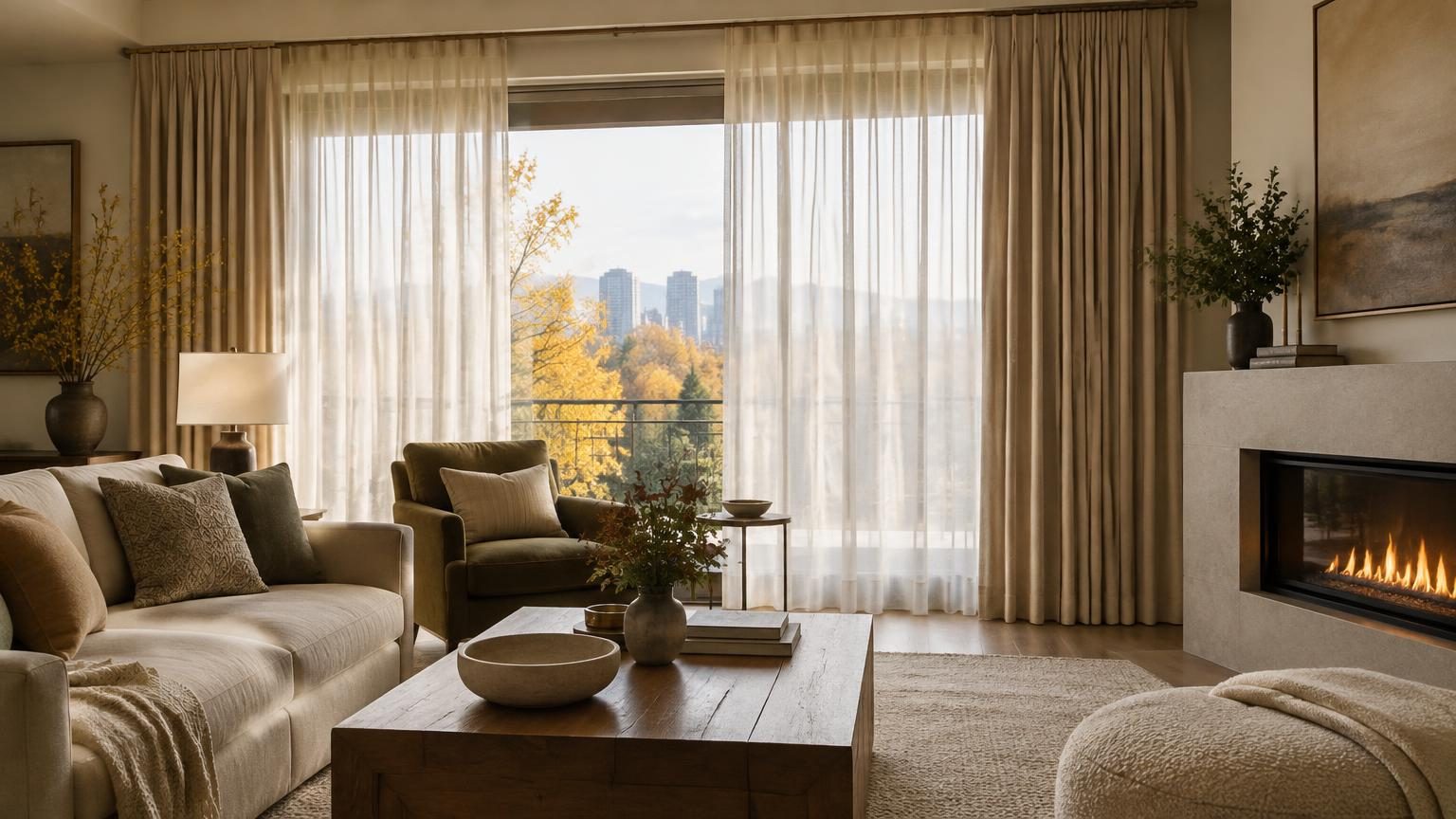
Layered sheers and ripplefold offer a clean way to separate daylight filtering from privacy and decorative fabric. The useful specification is the relationship between those layers: how each operates, where it stacks and how hardware clears the other treatment. The visual direction works only when the complete assembly fits the opening.
An ivory sheer can soften daylight while a more substantial panel frames the window. Confirm whether both layers traverse and whether the ceiling or wall can support the selected hardware. Our ripplefold drapery service is the place to review fabric, track compatibility and the intended fold before treating a reference image as a finished specification.
How can natural textures and woven woods work together?
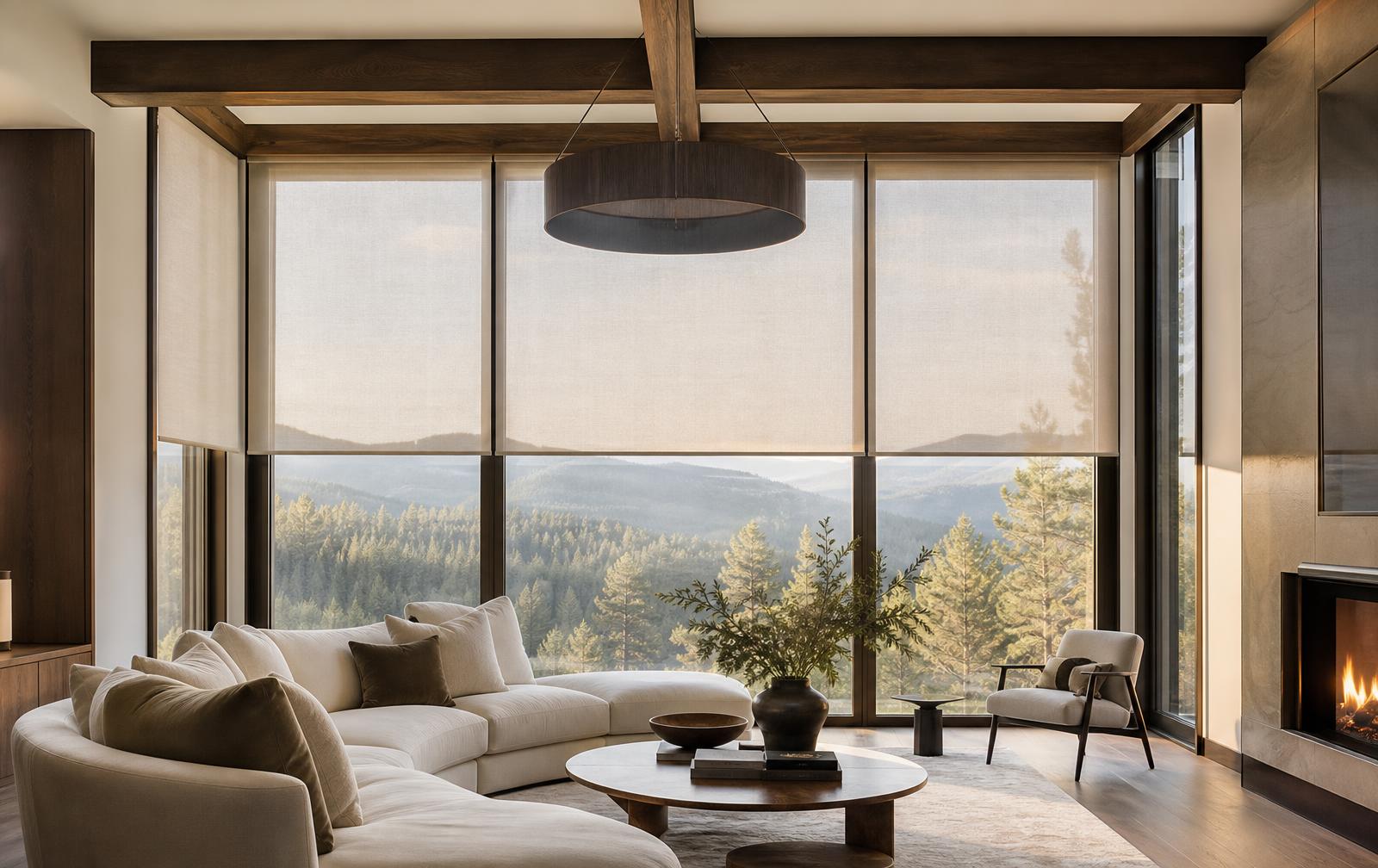
Natural textures and woven wood shades give designers ways to build material contrast without relying on a strong pattern. The specification should distinguish decorative texture from light control. Review openness, privacy, liner choices and edge conditions on the actual product, then coordinate any fabric layer with the shade's mounting and operation.
A linen-look panel beside a woven shade may feel cohesive without matching exactly. Examine samples in the room's light, not just on a presentation board. Natural variation is a selection consideration, not evidence of a defect or a promise of identical appearance. For cloth behavior, use our drapery fabric selection guide for designers before finalizing the pairing.
What should designers specify with warm hardware finishes?
Warm hardware finishes can connect window treatments with other metals in a room, but the finish name alone is not a specification. Compare a physical sample, confirm the product's available components and review bracket, rod or track requirements. The hardware must support the planned fabric assembly as well as the design palette.
Brushed brass and related warm tones can sit comfortably beside textured neutrals. Different suppliers may use similar finish names for different appearances. Record the approved finish reference and coordinate visible brackets, rings and finials. Our drapery hardware finishes guide provides a related starting point without replacing the chosen manufacturer's installation requirements.
Why ask about motorization at the start of a remodel?
Motorization belongs in the first remodel conversation because power, access and control decisions can affect finished construction. Asking early does not mean every opening needs a motor. It means identifying which treatments should operate together, who will coordinate controls and whether the selected system needs provisions before walls or ceilings close.
Bring the builder and relevant controls specialist into the discussion before assuming compatibility. Confirm the exact product, power approach, access for service and handover responsibilities. Avoid specifying from a general smart-home label. An early question preserves options; a late decision may require revisiting the mounting or electrical plan.
How do tailored Roman shades suit kitchens and baths?
Tailored Roman shades can introduce fabric and a controlled silhouette where a full drapery treatment would interfere with circulation or fixtures. Suitability depends on the opening and room conditions, not the style alone. Check moisture, splash exposure, cleaning requirements and lifting clearance before selecting fabric, lining and the shade's construction.
Keep fabric away from conditions the selected material cannot tolerate. Review the raised stack against the view, window handle and adjacent cabinetry. A crisp reference image does not confirm that the proposed cloth will fold cleanly. Coordinate pattern placement and lining with the workroom before using the same textile across different treatment types.
Where do performance fabrics fit the seasonal palette?
Performance fabrics are relevant when a project has specific maintenance or exposure requirements, not simply because the label sounds reassuring. Review documented claims for the selected cloth and intended application. Its hand, finish and thickness still need to support the treatment, so practical care requirements and fabrication behavior should be assessed together.
Ask which care methods are permitted and whether the textile is recommended for the intended window use. A finish designed for one application does not establish suitability for every drapery or shade. Match the client's maintenance expectations with the supplier's guidance, and avoid making unverified promises about fading, staining or service life.
How should fall trends translate into a workroom brief?
A workroom brief should translate the visual direction into decisions someone can fabricate and install. Include the product, fabric, operation, mounting conditions and unresolved questions. The table below connects each general fall direction with its coordination needs, helping the design team preserve the intended appearance without leaving construction details to assumption.
| Trend | What it looks like | Spec considerations at the workroom |
|---|---|---|
| Layered sheers and ripplefold | Soft daylight behind regular folds | Separate operation, compatible track and clear stack space |
| Natural textures and woven woods | Textured neutrals with material contrast | Openness, liner choice, privacy and sample variation |
| Warm hardware finishes | Brushed warm metal beside textile layers | Approved finish sample, compatible parts and fabric load |
| Motorization planning | Controls integrated with the room | Product compatibility, power, service access and coordination |
| Tailored Roman shades | A composed fabric treatment at the opening | Raised stack, fixture clearance, exposure and fabric behavior |
| Performance textiles | A practical cloth within the design palette | Documented application, care guidance and finished hand |
How should designers plan for holiday installations?
Holiday installation planning starts with confirmed materials, approved specifications and a coordinated site schedule rather than an assumed production interval. Ask the workroom to review the actual scope and dependencies before promising a date. Fabric availability, field measurements and installation readiness belong in the same conversation as the chosen design direction.
Our fall production calendar and holiday planning guide helps frame that conversation. Pair it with the fabric sourcing and lead-time outlook, then confirm current information for the actual material. No general trend article establishes a delivery commitment or reserved production space.
Frequently asked questions
These answers turn seasonal design directions into practical questions for the project team. They describe options, not universal recommendations or guarantees of availability. Confirm the selected product and construction details with the workroom and relevant installer, then keep the approved decisions together so procurement and site coordination follow the same brief.
What are the fall 2026 window treatment trends?
General requested directions include layered sheers, natural textures, warm hardware and tailored shades. Evaluate each against the room rather than treating it as a required look.
Do ripplefold sheers provide nighttime privacy?
Not necessarily. Privacy depends on the cloth and lighting conditions. Review the sample and specify a separate privacy layer when the project requires one.
Should every remodel include motorized treatments?
No. Ask about motorization early so power and control options can be reviewed, then decide based on the project's operation and coordination needs.
Can woven wood shades be paired with drapery?
Yes, subject to product review. Coordinate liner choices, mounting clearances and the drapery stack so both layers can perform their intended roles.
Are Roman shades suitable for every bathroom?
No. Assess moisture, splash exposure, ventilation, care and fixture clearance before approving a fabric shade for the particular opening.
Can a holiday installation date be guaranteed from a trend guide?
No. A commitment requires review of materials, approvals, fabrication scope and site readiness with the team responsible for the project.
Ready to translate the direction into a workable brief? Open a trade account or send a spec to Roseworks Fabrication so the fabric, hardware and project requirements can be reviewed together.