How to Choose a Window Treatment Fabricator in Colorado: A Designer's Guide to Quality, Speed and Local Service
Short answer: The best window treatment fabricator for a Colorado designer is a local, trade only workroom that reviews your specs before cutting, gives a written timeline at order release, and fabricates every product category your project needs under one roof. Judge quality by finished samples, speed by communication, and local value by who handles a fix.
Roseworks Fabrication is a trade only workroom in Westminster, Colorado serving the Denver metro and mountain markets. For the full picture of how a trade workroom fits into your process, start with our Denver window treatment workroom guide. This article is the checklist we would hand a designer interviewing any fabricator, including us.
What makes a window treatment fabricator the right fit for designers?
The right fabricator protects your design intent and your client relationship at the same time. That means trade only service, a person who reviews every order for buildability, honest timelines, and consistent finishing across drapery, shades, valances and soft goods. A low price or a fast quote matters far less than whether the finished piece matches the spec.
Designers often discover workroom problems at install, when it is too late and too expensive to fix them. A good partner catches issues on paper: a fabric repeat that will not match across widths, a stack back that blocks a door, or a Roman shade too wide for the selected fabric. Ask every candidate who reviews the order and when.
How do you evaluate fabrication quality before placing an order?
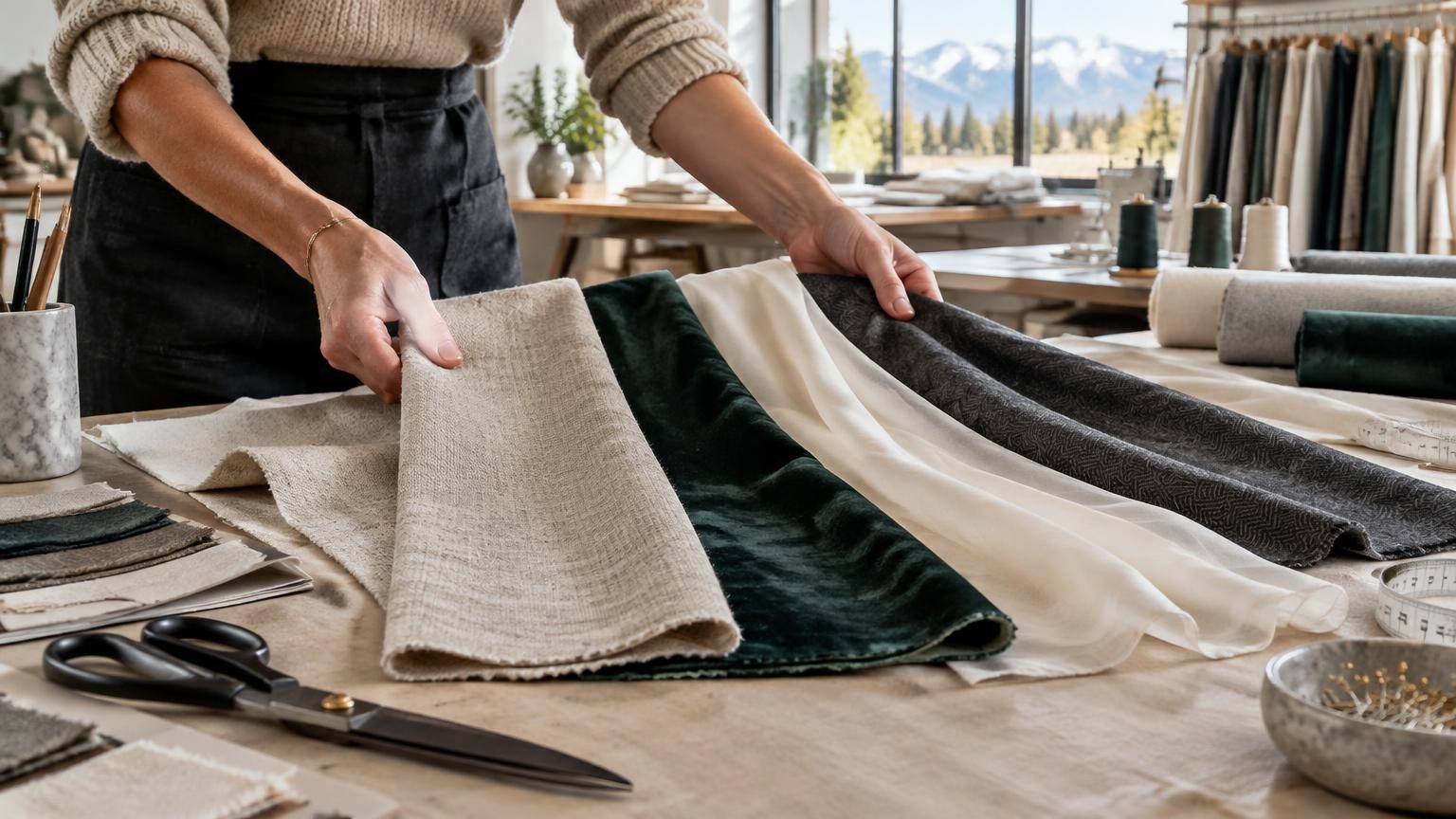
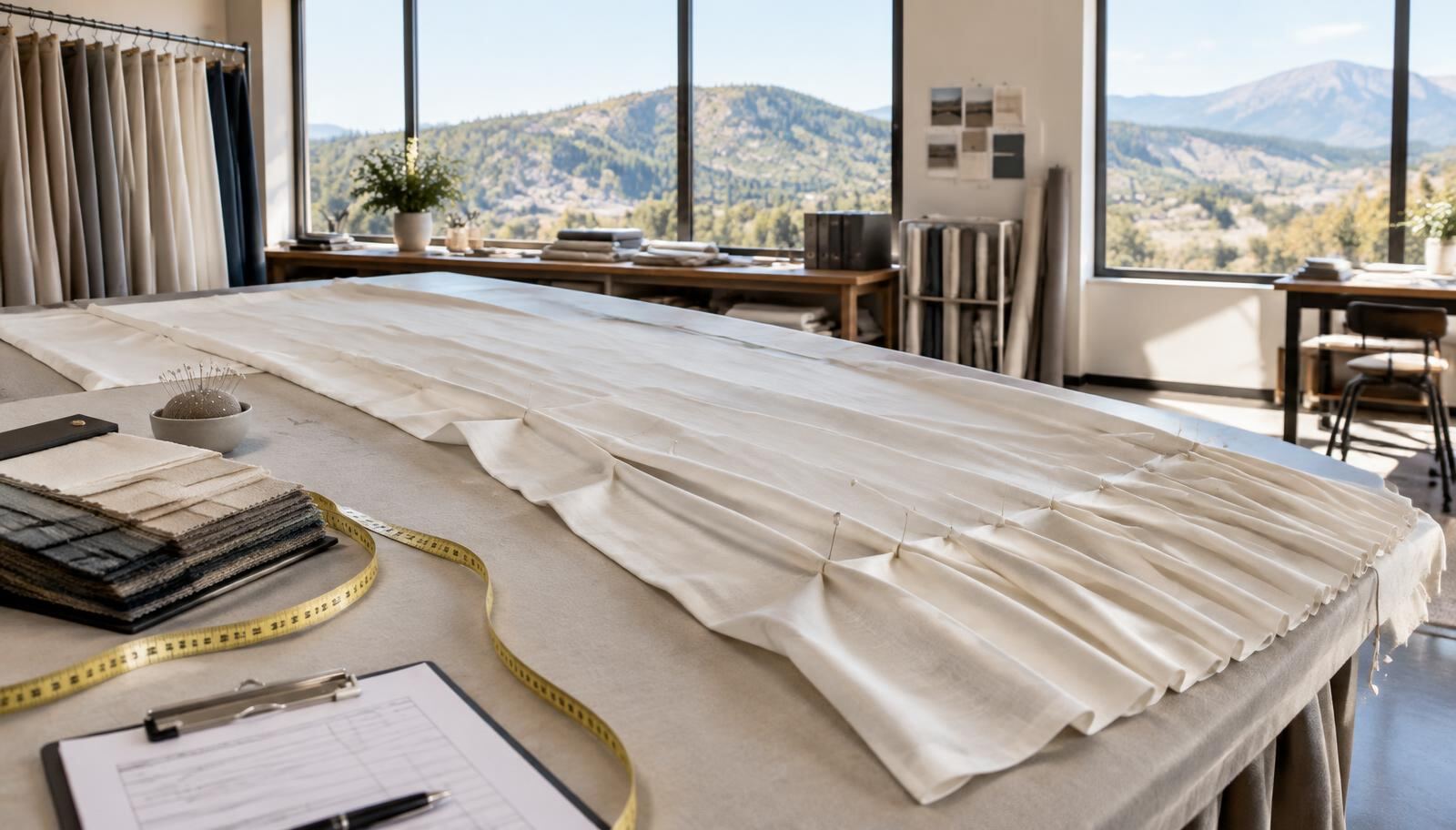
Evaluate quality by inspecting finished work, not photos. Ask to see a lined and interlined panel, a Roman shade, and a valance or cornice. Check pattern matching at seams, hem weights, square corners, consistent pleat spacing and clean lining. A workroom confident in its craft will invite you in to see work on the tables.
| What to check | What good looks like | Question to ask |
|---|---|---|
| Pattern matching | Repeats align across every seam and panel pair | How do you handle repeats on wide, multi width panels? |
| Hems and headers | Blind stitched hems, weighted corners, firm buckram headers | Which hems are hand finished? |
| Linings and interlinings | Lining options matched to sun exposure and fabric weight | What lining do you recommend for west facing Colorado windows? |
| Roman shade construction | Level folds, even ring spacing, square bottom edge | What width limits do you set for each fabric type? |
| Labeling | Every piece tagged by room and window | How are finished goods packed for the installer? |
Pleat style is another tell. A workroom that can explain the difference between a French pleat, a goblet and a ripplefold drapery header, and how each stacks, understands the details that make a room read as custom. Our pleat styles trade reference covers those choices.
How can designers get quick turn times without sacrificing quality?
Quick turn times come from clean orders, not shortcuts. A fabricator moves fastest when measurements, fabric, hardware and mounting details are complete on day one. Choose a workroom that confirms receipt of materials, gives a written ship or install window at release, and tells you early when something changes, rather than one that promises the shortest number.
Ask how the workroom handles fabric that arrives with a flaw, how it prioritizes rush work, and what happens when a client changes a fabric mid project. Holiday and spring install seasons fill quickly, so plan around the production calendar. Our posts on rush jobs in Denver and managing client expectations on timelines go deeper.
Checklist for a fast, clean order
- Final measurements, with inside or outside mount and any out of square notes
- Fabric confirmed in stock, with yardage calculated for repeats and returns
- Hardware selected, including finish, bracket placement and motorization power
- Lining, interlining and pleat style written on the order
- Install address, access notes and delivery contact
Why should Colorado designers choose a local fabricator?
A local Colorado fabricator gives you faster answers, in person sample reviews, and simpler fixes. When a panel needs a hem adjusted or a shade needs re-stringing, a workroom in the Denver metro can handle it without a cross country shipment. Local teams also understand high altitude sun, dry air and mountain home logistics.
Colorado conditions change specification choices. Strong UV fades silk and some dyes, and dry air affects how natural linens hang. See our guides on UV fade protection at altitude and specifying linen for a dry climate. Our workroom address, hours and directions are on the Roseworks location page.
Which products should one workroom be able to fabricate?
A designer saves time and gets a cohesive room when one workroom fabricates every soft element. Look for a fabricator that produces drapery, Roman shades, valances and cornices, upholstery, cushions, pillows and bedding, and can source hardware. One partner means matched fabric lots, consistent finishing, and one schedule.
| Product | Why it matters to source together | Learn more |
|---|---|---|
| Custom drapery | Sets the room's scale and fabric story | Custom drapery fabrication |
| Roman shades | Often shares fabric with drapery in kitchens and baths | Custom Roman shades |
| Valances and cornices | Finishes the top treatment over shades or panels | Valances and cornices |
| Upholstery | Coordinates headboards, benches and seating | Custom upholstery |
| Pillows and bedding | Repeats accent fabrics across the room | Pillows and bedding |
| Cushions and soft goods | Window seats and outdoor cushions match the palette | Cushions and soft goods |
| Drapery hardware | Rods and tracks determine stack and function | Drapery hardware |
What should a trade program include?
A strong trade program gives designers trade pricing, support for customer's own material (COM), a clear way to submit orders, and project visibility. It keeps the client relationship with the designer. Ask how pricing is quoted, whether COM is accepted, and how you track order status from submission to delivery.
Roseworks works only with designers, architects, AV professionals and builders. Learn how COM works in our COM fabrication guide, browse fabric guidance on our fabrics page, and see what to bring to a first order in the drapery fabric selection guide.
What red flags should designers watch for in a workroom?
Watch for vague timelines, no order review, refusal to show finished work, and selling directly to your clients. Other warnings are inconsistent labeling, no written policy on fabric flaws, and slow replies before you have even placed an order. Communication before the first order is usually the best preview of communication during one.
Compare candidates with the questions in what to look for in a drapery workroom partner and how to choose a drapery workroom.
Frequently asked questions
How do I find a trade only window treatment fabricator in Colorado?
Look for workrooms that state they serve designers, architects and builders only, then visit in person. Roseworks Fabrication is a trade only workroom at 12170 Tejon St #300 in Westminster, serving the Denver metro, the Front Range and mountain projects across Colorado.
What turnaround should I expect for custom drapery?
Turnaround depends on fabric arrival, order complexity and season. A reliable workroom gives you a written timeline once fabric and specs are confirmed, and updates you if anything changes. Plan extra time before the holidays and spring, when install calendars fill.
Can a workroom fabricate with my client's own fabric?
Most trade workrooms accept customer's own material, often called COM. Send yardage calculated for repeats, returns and hems, and ask the workroom to inspect the fabric on arrival. Roseworks reviews COM before cutting so flaws are flagged early.
Is a local fabricator better than a national one?
For most Colorado designers, yes. A local fabricator offers in person sample reviews, faster communication, and adjustments without long shipping delays. Local teams also understand high altitude UV and dry air, which affect lining and fabric choices.
What products can Roseworks Fabrication make?
Roseworks fabricates custom drapery, ripplefold drapery, Roman shades, valances and cornices, upholstery, pillows and bedding, and cushions and soft goods, and supplies drapery hardware. Designers can coordinate a whole room with one workroom.
How do I open a trade account?
Apply through the Roseworks trade program. Approved designers, architects and builders get trade pricing and can submit orders online. Visit the trade professionals page to see program details and start an application.
Ready to work with a Colorado workroom? Explore the Roseworks trade program for designers, or apply for a trade account and send your first spec for review.