Performance and Recycled Textiles: What Actually Holds Up on a Window
Every showroom introduction this season carries a story about the fiber. Recycled content. Bio based backing. Solution dyed yarn that resists Colorado sun. Designers are being asked to specify from that story, and clients increasingly ask for it by name. The difficulty is that most of these claims were written for upholstery and outdoor furniture, where abrasion and cleanability rule. A window asks different questions.
Drape is still the first test
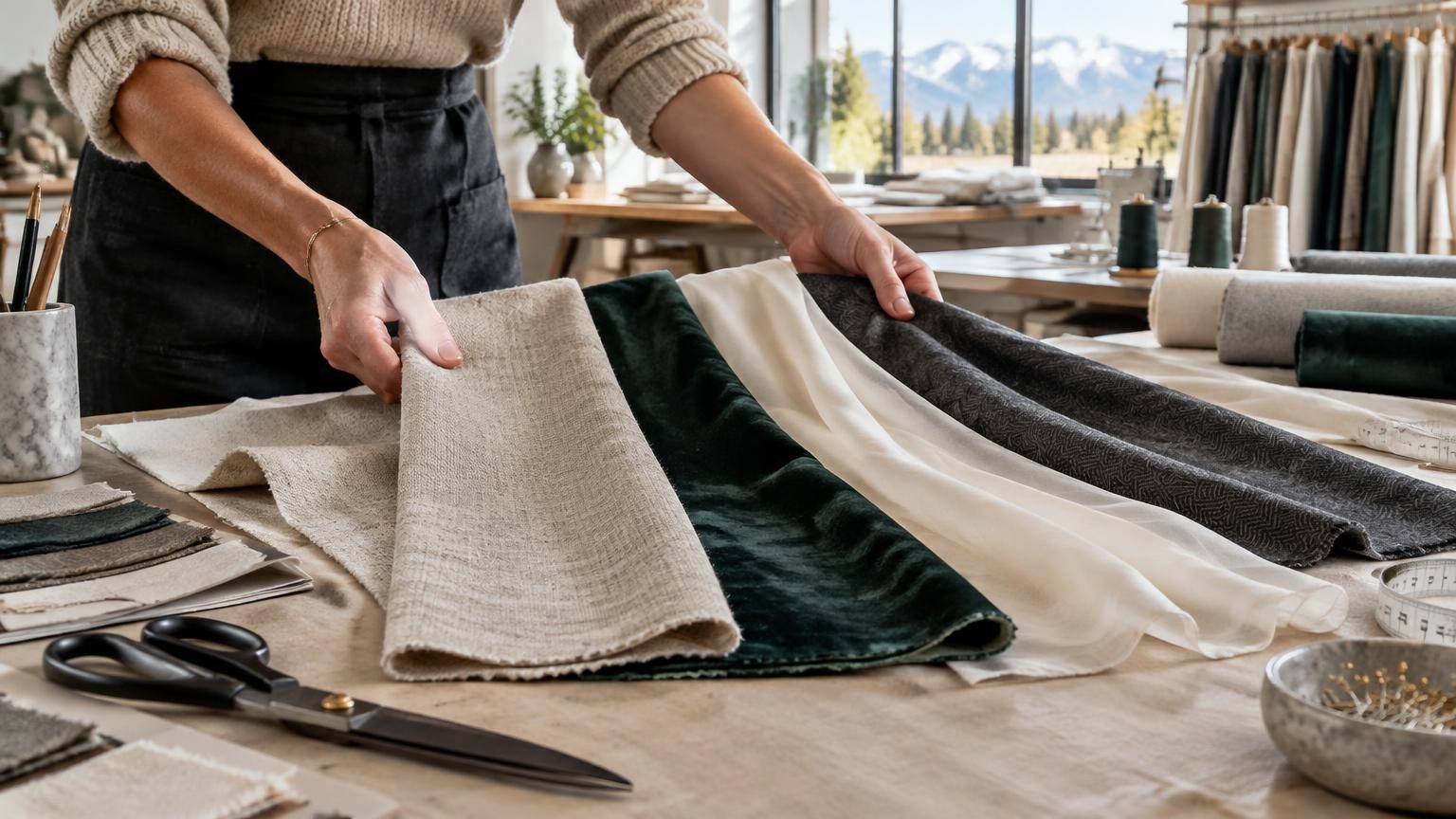
A fabric can be beautiful, durable, and responsibly made and still fail on a window because it will not fold. Tightly woven performance textiles with a heavy backing tend to break rather than fold, which reads as stiffness in a pinch pleat and as buckling in a relaxed roman. Before a fabric goes on a schedule, hold a yard vertically and let it fall. If it holds a hard crease where your hand was, it will hold that crease in the finished panel.
Recycled content and hand are not opposed anymore
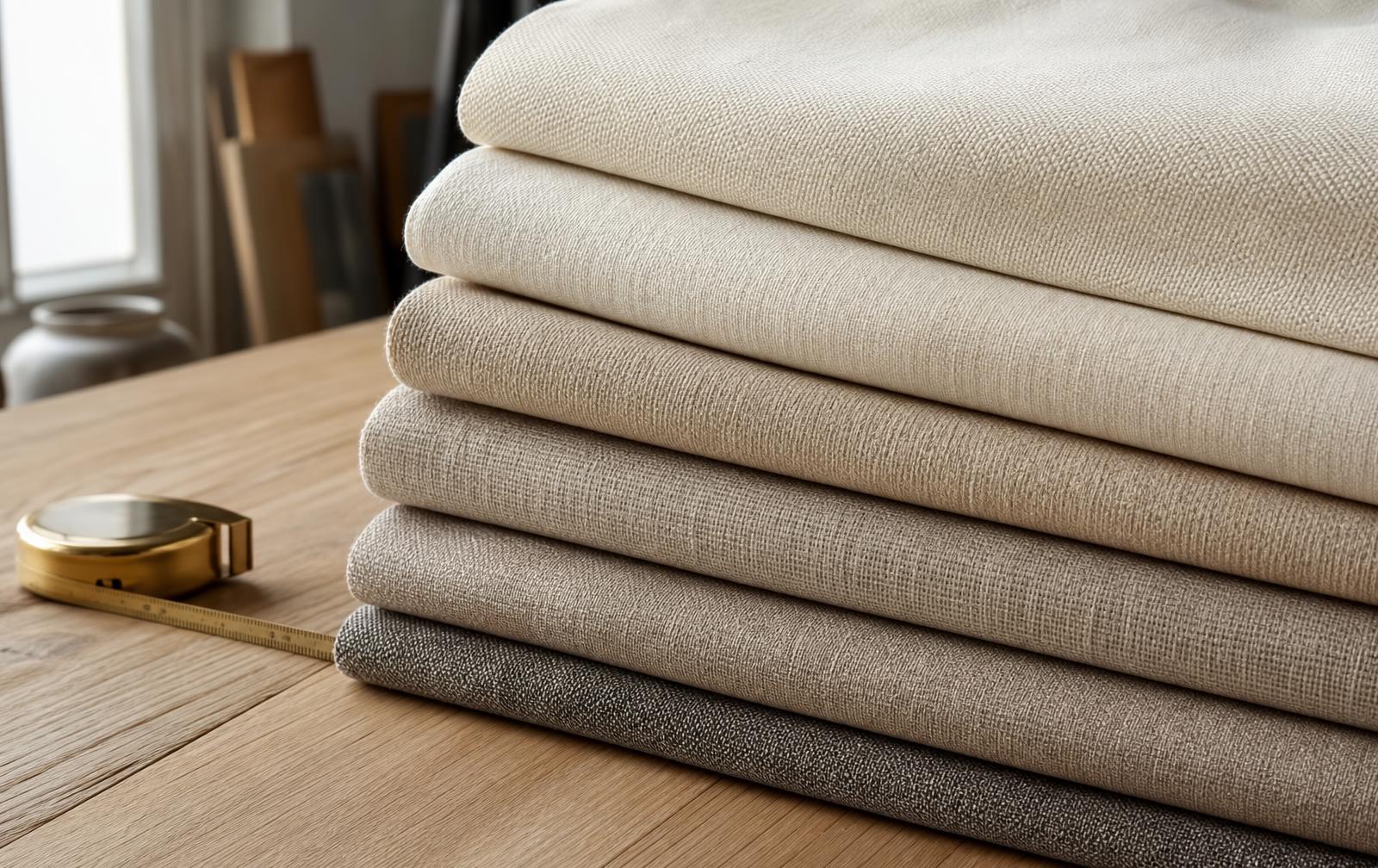
The honest change of the last two years is that recycled polyester blends have improved enough to behave like textiles rather than like plastic. Many now have a dry linen like hand, matte surface, and reliable weight for drapery. They also bring real advantages for west facing Colorado glass, where UV degradation ends the life of a natural fiber panel long before wear does. For a client who wants the look of linen on a wall of mountain facing windows, a recycled blend is often the more responsible specification, not the compromise.
Where performance finishes help and where they interfere
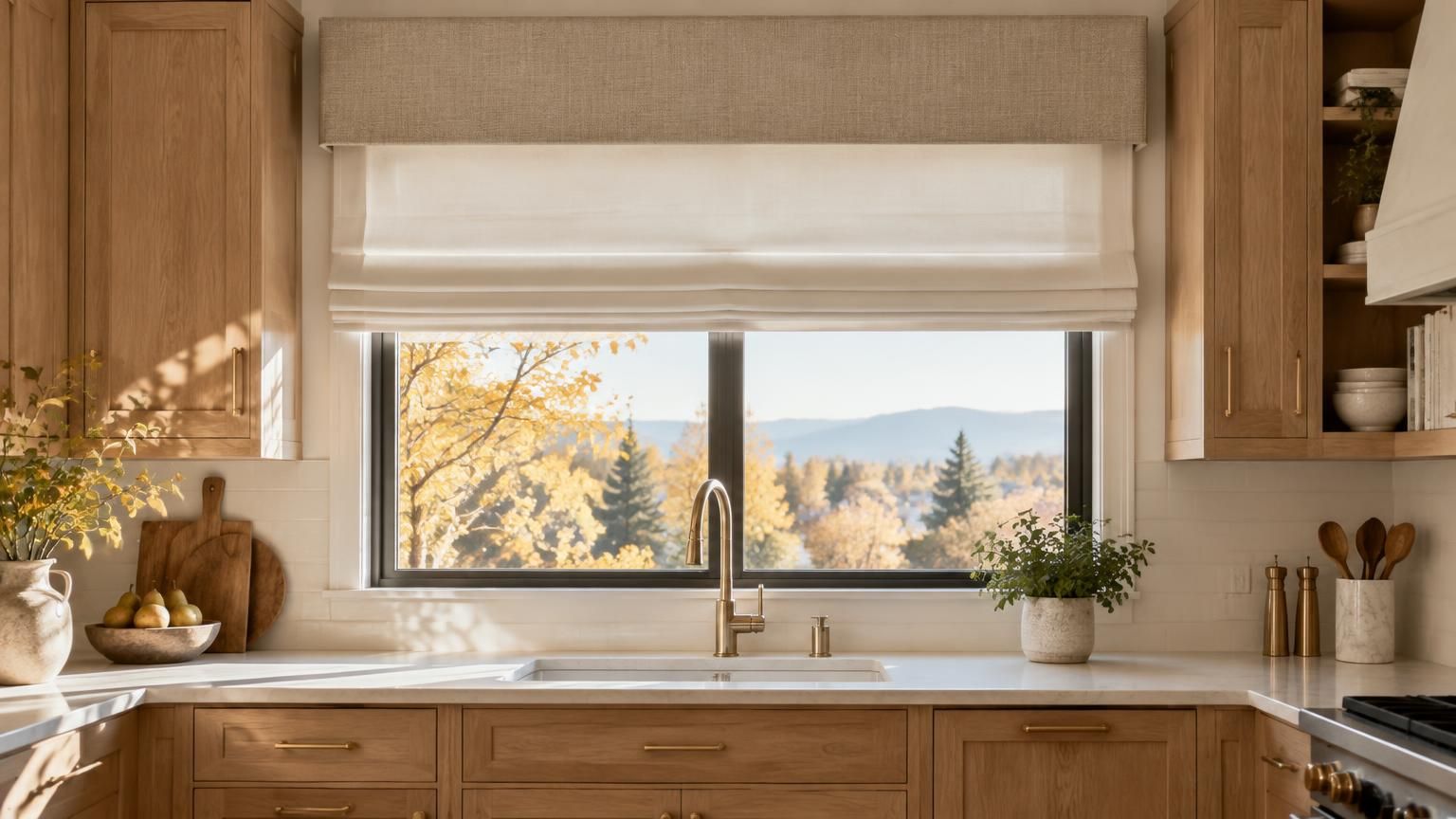
Stain resistant finishes are worth having on cushions, banquettes, and anything within reach of a child. On drapery they matter less, and on sheers they can change the way light passes through the cloth. Moisture resistant finishes matter in bathrooms and kitchens, where the alternative is a panel that absorbs cooking oil and holds it. Match the finish to the actual risk in the room rather than applying it as a blanket upgrade.
Questions to ask before the order
Ask the mill for width, repeat, fiber content, and railroading capability in the same message. Ask whether the fabric has a backing and whether that backing is compatible with the seaming your treatment requires. Ask about shrinkage, because a fabric that relaxes after fabrication will show it in the hem. Ask for the light transmission if the room needs privacy, since a recycled sheer can read far more open in place than it does folded on a table.
Send us a full yard
Memo samples tell us color. They do not tell us behavior. When a project depends on a new performance or recycled textile, a full yard lets our workroom test the fold, the seam, the needle, and the pressing temperature before we cut the client's yardage. That single step prevents most of the surprises this category creates.
Roseworks Fabrication fabricates in performance, recycled, and natural fiber textiles for trade partners throughout Colorado. Send the sample and the specification, and we will tell you honestly how it will behave on the window.