Kitchen Valance Designs: Layering Valances and Cornices Over Roman Shades
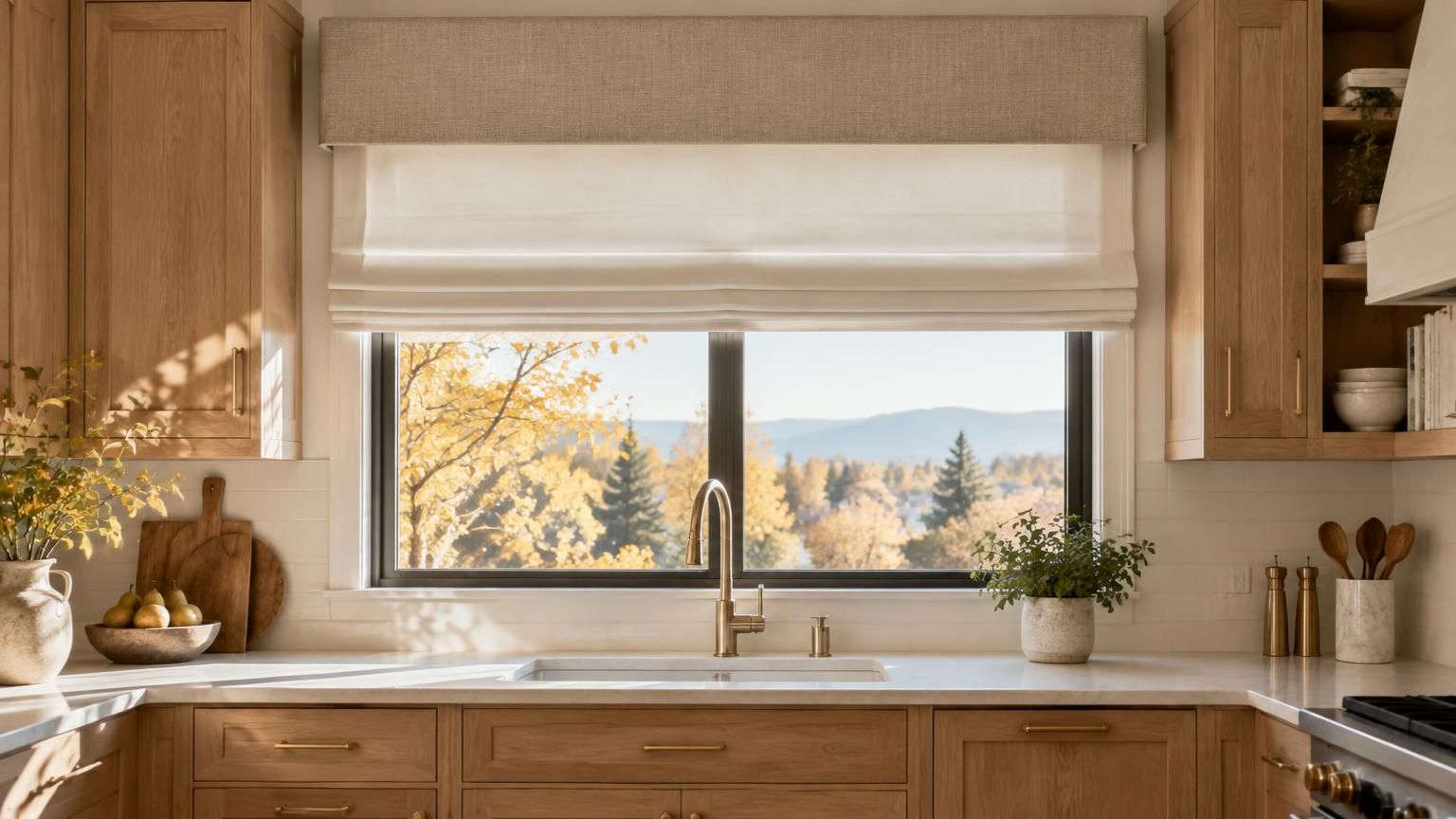
Short answer: Kitchen valances and cornices over Roman shades are back on designer spec sheets this fall because they finish a window with softness while the shade handles light and privacy. A tailored flat valance or upholstered cornice hides the headrail, adds color or pattern, and keeps fabric clear of the sink and backsplash.
Roseworks Fabrication is a trade-only workroom in Westminster, Colorado, fabricating for interior designers, architects and builders across the Denver metro. Our valances and cornices service covers the construction details below, and this guide explains how to plan the layered kitchen look so the order goes into production cleanly.
Why are valances returning to kitchen designs?
Valances are returning because designers want warmth above hard surfaces without hanging full drapery near a sink or cooktop. A tailored valance adds a band of textile at the top of the window, conceals shade hardware, and lets the room carry pattern or color in a small, controlled dose that is easy to coordinate.
The current look is not the gathered, swagged valance of past decades. Requests we see lean toward clean flat valances, box pleats, soft London styles and upholstered cornices with crisp edges. Paired with a Roman shade or woven wood below, the result reads custom and layered rather than fussy.
Valance or cornice: which suits a kitchen window?
Choose a soft valance when you want fabric movement and a lighter feel, and choose an upholstered cornice when you want architectural structure and clean lines. Both can sit over an operating shade. The decision usually depends on cabinet style, ceiling height, available wall space above the window and how much pattern the room can carry.
| Top treatment | Look | Best kitchen use | Spec watch-outs |
|---|---|---|---|
| Flat tailored valance | Clean, minimal band of fabric | Transitional and modern kitchens | Pattern placement and centering across the face |
| Box pleat valance | Structured folds, gentle rhythm | Traditional or farmhouse spaces | Pleat spacing relative to window width |
| London or relaxed valance | Soft swags at the hem | Breakfast nooks and softer rooms | Fabric hand; stiff textiles do not relax well |
| Upholstered cornice | Architectural, crisp edges | Windows needing structure or hardware concealment | Return depth and clearance for shade operation |
For deeper construction detail on returns and board depth, see our post on upholstered cornice and valance returns.
How do you layer a valance over a Roman shade?
Layer a valance over a Roman shade by mounting the shade first, then setting the valance board or cornice far enough forward to clear the shade's stack when raised. The valance face should cover the headrail and part of the stacked folds. Confirm mount type, projection and bottom-of-valance height before fabrication begins.
Inside-mounted shades with an outside-mounted valance are common in kitchens because the shade stays tidy within the frame while the valance extends past the casing. When the window sits close to the ceiling or upper cabinets, measure the available height carefully; a valance that is too short looks like an afterthought, and one that is too long blocks the view. Our guide to custom Roman shades in Denver covers shade-side measuring.
What fabrics work for kitchen valances?
Fabrics with medium weight, stable weave and good cleanability work best for kitchen valances. Linens, linen blends, cotton prints and many performance textiles fabricate well into tailored shapes. Avoid very loose weaves near cooking areas, and confirm care requirements so the client understands how the treatment should be maintained.
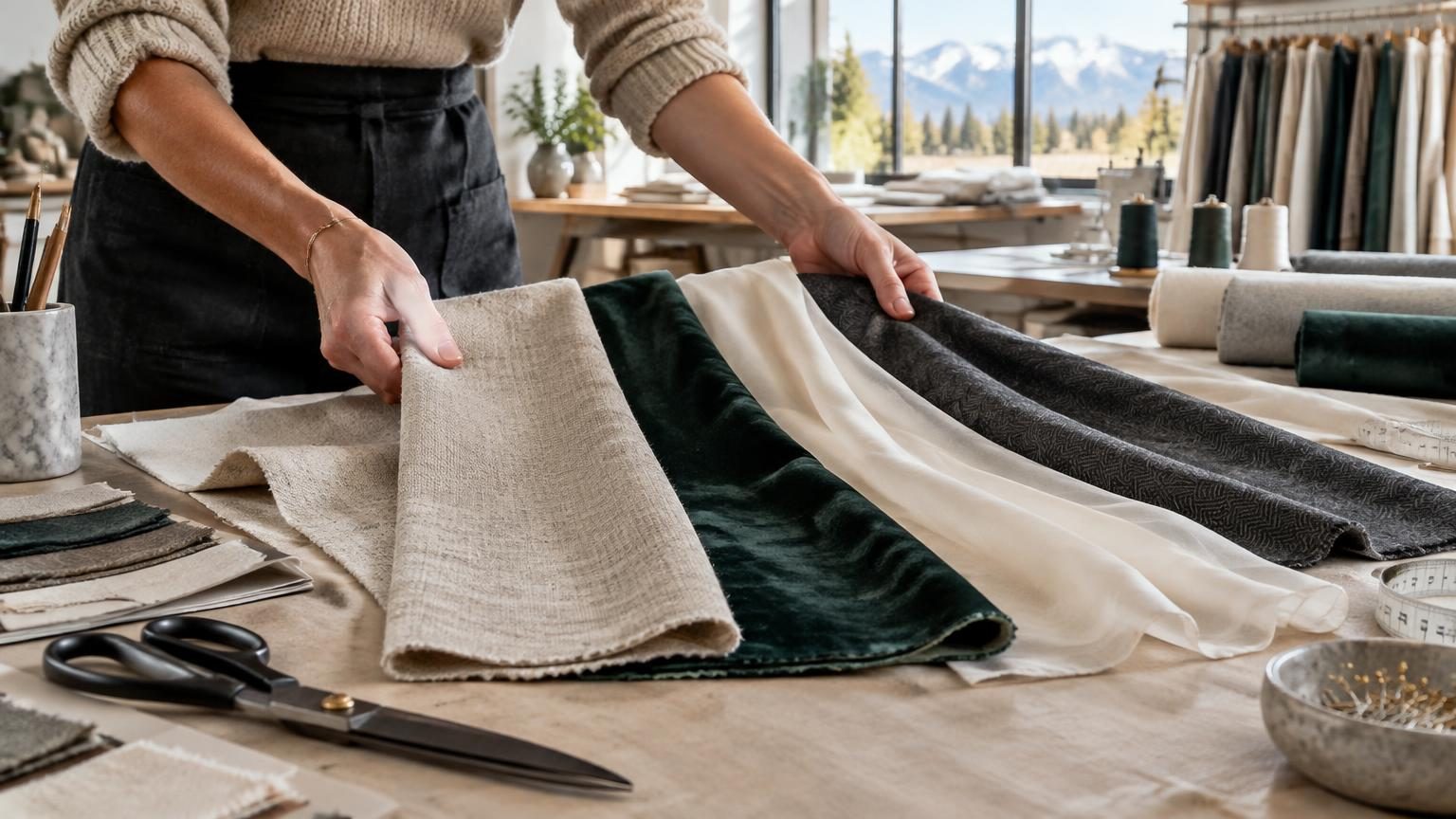
Because valances use a modest amount of fabric, they are a good place for a bolder print or a COM textile the client loves. Send a cutting so the workroom can review repeat, flaws and whether the pattern can be centered across the face. Our drapery fabric selection guide walks through fiber, hand and lining choices that apply here too.
What should be on the spec before ordering?
A complete valance spec lists finished width, finished length, return depth, mount type, style, fabric with pattern direction, lining choice and any trim. Including the shade below, its mount and stack height lets the workroom coordinate both pieces so they fit together on install day without adjustments in the field.
- Window and casing measurements, plus wall space to ceiling or cabinets
- Shade mount type, projection and stacked height
- Valance or cornice style, finished width, length and return depth
- Fabric name, cutting, repeat and desired pattern placement
- Lining, interlining or padding for cornices
- Trim, banding or welting details
- Install timing, especially for holiday deadlines
Planning around the season matters. If the kitchen needs to be finished for hosting, review our fall production calendar and see fall 2026 window treatment trends for how valances fit into broader layering requests.
Do you fabricate valances for Denver designers?
Yes. Roseworks fabricates custom valances and cornices for trade clients across the Denver metro from our Westminster workroom. Designers can submit specifications through a trade account, and we coordinate the top treatment with shades, drapery or woven woods in the same project for a consistent finish and a single production schedule.
See our custom window valances page for local service details and examples.
Frequently asked questions
Are valances outdated in kitchens?
Not when they are tailored. Clean flat valances, box pleats and upholstered cornices read current, especially layered over Roman shades or woven woods.
Can a valance hide Roman shade hardware?
Yes. Sizing the valance face and projection to cover the headrail and part of the raised stack is one of the main reasons designers specify one.
Is a cornice better than a soft valance?
Neither is better overall. A cornice adds structure and crisp lines, while a soft valance adds movement. Choose based on the room's style and wall space.
Can I use COM fabric for a valance?
Yes. Send a cutting with supplier details so the workroom can review repeat, flaws, width and pattern placement before the order is released.
How far should a valance project from the wall?
Far enough to clear the shade below when it is raised. The exact return depends on the shade's mount and stack, so confirm it on the spec.
Can a valance be added to an existing shade?
Often, yes. Provide the existing shade's mount type, projection and stacked height so the new valance can be sized to clear and cover it.
Ready to layer a kitchen window? Send your valance or cornice spec to the workroom through our valances and cornices service, or open an account through the trade program to start ordering.