The Complete Guide to Custom Drapery Fabrication: From Specification to Installation
Custom drapery fabrication is the process of building window treatments from raw materials to finished panels, tailored to the exact specifications of a project. Unlike manufacturer-produced drapery that ships in standard configurations, custom fabrication starts with your measurements, your fabric, and your construction preferences. The result is a product that fits precisely, performs as intended, and reflects the design vision behind the project.
At Roseworks Fabrication, we have been building custom drapery in our Westminster, Colorado workroom since 2015. We serve interior designers, architects, builders, and homeowners across the Denver metro area, the Front Range, and Colorado's mountain communities. This guide covers everything you need to know about the fabrication process, whether you are specifying drapery for a client project or selecting treatments for your own home.
What Makes Custom Fabrication Different
Mass-produced drapery is designed for volume and speed. Panels come in standard lengths (84, 96, or 108 inches), limited fabric options, and pre-set construction methods. They work for simple applications where a standard size happens to fit.
Custom fabrication starts from zero. Every panel is cut, sewn, and finished based on the exact dimensions of the window, the specific fabric selected, the chosen pleat style, the lining type, and the hardware system it will hang from. Nothing is assumed. Nothing is standardized.
For trade professionals, this means you can specify exactly what your client needs without compromising. Non-standard window sizes, specialty fabrics, complex headers, and integration with motorized hardware are all standard work in a custom workroom.
For homeowners, custom fabrication means your drapery will fit your windows perfectly, hang with the correct weight and fullness, and function the way you need it to for light control, privacy, and insulation.
Understanding Drapery Pleat Styles
The pleat style determines the visual character of the finished drapery. Each style creates a different fold pattern, a different level of formality, and a different relationship with the hardware.
Pinch pleat is the most traditional header. Fabric is gathered into evenly spaced clusters, typically two-finger or three-finger configurations. Pinch pleats create structured vertical folds that read as polished and intentional. They work in traditional, transitional, and modern interiors that call for clean vertical lines.
French pleat shares the gathered structure of a pinch pleat but with a more refined, tailored finish. The pleats are joined at the front of the fabric panel, creating a contemporary classic look. French pleats are one of the most commonly specified styles by Denver interior designers.
Goblet pleat features a tulip-shaped cup at the top of each pleat. The top is stuffed to create the goblet shape, adding a sculptural detail. This style is reserved for formal spaces where the drapery is a focal point.
Cartridge pleat creates smooth, uniform cylindrical folds. Each fold is shaped and filled with interlining to hold its form. Cartridge pleats deliver a crisp, architectural appearance.
Inverted pleat positions the fullness behind the face of the fabric, creating a flat, tailored front with hidden volume. This style works well in contemporary and minimalist interiors.
Ripple fold runs on a track system, creating a continuous wave of fabric. It is the most minimal header style and integrates easily with motorized track systems for smart home compatibility.
For a detailed visual reference of all pleat styles we fabricate, see our Custom Drapery page.
Fabric Selection and COM
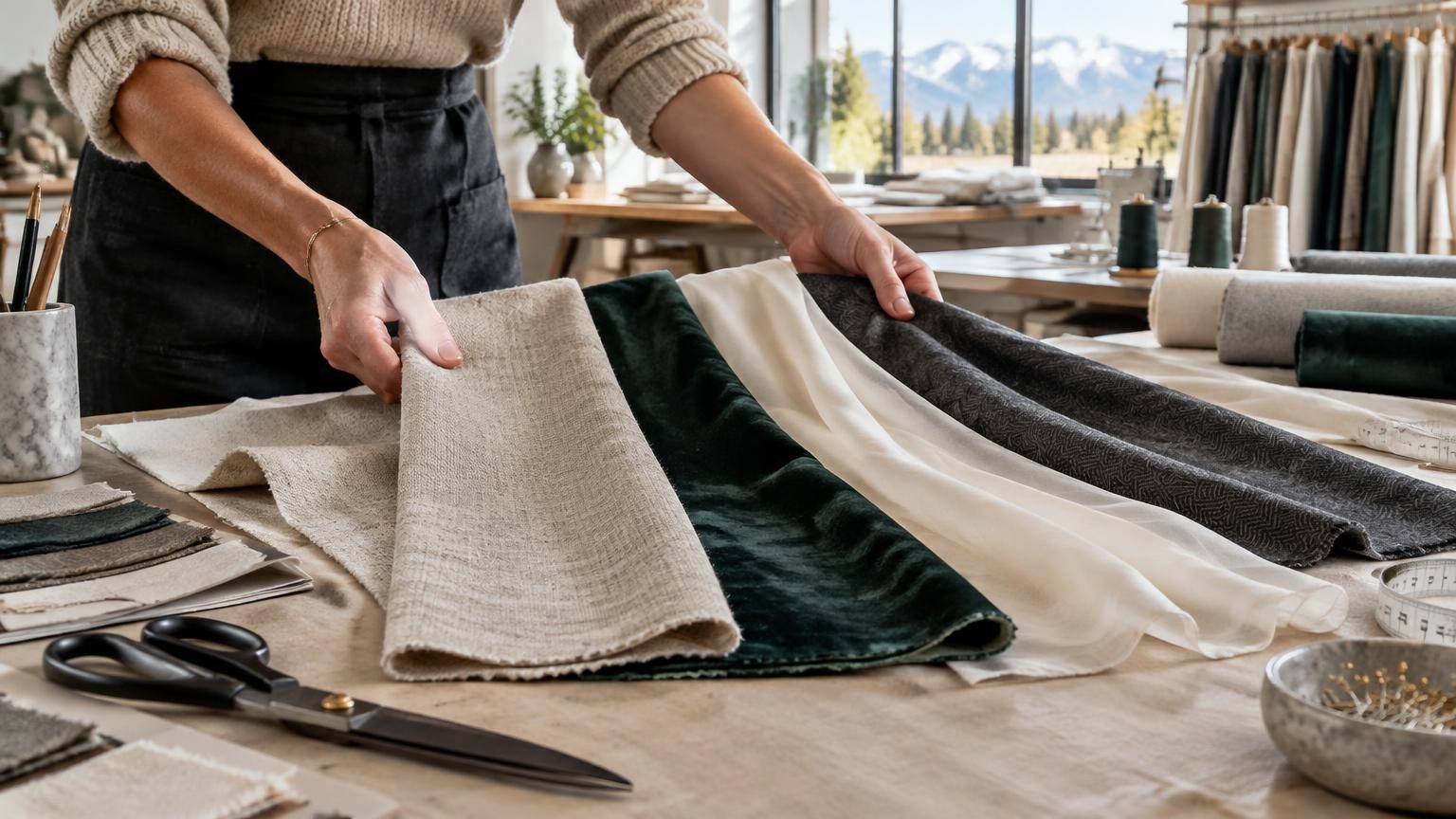
Fabric is the soul of any custom drapery project. It determines how the panels drape, how they filter or block light, how they age, and how they coordinate with the rest of the interior.
We work with two fabric sourcing models:
COM (Customer's Own Material) is the most common approach for trade orders. Designers select and purchase fabric from their preferred suppliers, then ship it directly to our workroom. We inspect it upon arrival, confirm yardage, and proceed with fabrication. COM gives designers full control over material specification.
Workroom-sourced fabric is available for homeowners or designers who want guidance. We maintain relationships with premium textile suppliers and can help source fabrics based on your project requirements.
Regardless of sourcing, we advise on weight, drape characteristics, lining compatibility, and construction suitability. If a fabric is not well-suited for the specified application, we will tell you before production begins.
Colorado's high-altitude UV exposure is a real consideration. Fabrics on west-facing windows degrade faster here than at sea level. We recommend UV-protective linings for any window with significant sun exposure.
The Role of Lining
Lining is invisible from the front of the panel but fundamentally shapes how the drapery performs.
Standard cotton lining adds body and structure while protecting the face fabric from sun damage. It is the default for most residential drapery.
Blackout lining blocks nearly all light transmission. Essential for bedrooms, media rooms, and any space where complete darkness is required.
Interlining is a soft flannel layer placed between the face fabric and the lining. It adds weight, improves drape, and creates a more luxurious hand. Interlining is standard on high-end residential projects.
Thermal lining provides insulation value, helping regulate room temperature. Useful in Colorado mountain homes and older residences with single-pane windows.
Production Timeline
Standard fabrication at Roseworks runs 4 to 6 weeks from order confirmation. Timeline depends on:
- Complexity of the construction (simple rod pocket vs. multi-layer goblet pleat)
- Number of panels in the order
- Fabric availability (COM must arrive before production starts)
- Current workroom queue depth
We provide a confirmed timeline at order placement and communicate proactively if anything shifts. For trade professionals managing project schedules, this predictability is essential.
Rush production is available for select projects. Contact us to discuss your timeline requirements.
For a deeper look at what to expect during the production process, see our post: Roman Shade Fabrication Timelines: What to Expect from Order to Delivery.
Quality Control and Finishing
Every finished panel goes through a multi-point inspection before it leaves our workroom:
- Measurements verified against original specification
- Stitch quality and header construction inspected
- Hem weight and hang confirmed
- Pressing and steam finishing
- Packaging for safe transport
Panels that do not meet our standard are corrected before delivery. This inspection is the final quality gate before the product reaches the project site.
Installation
Finished drapery is delivered directly to your installation team or installed by our trusted partners. Installation includes bracket placement, panel hanging, steaming on-site, and dressing the panels into their correct fold pattern. Panels are tied for 48 to 72 hours so the fabric develops the memory to hold its shape permanently.
Working with Roseworks
Whether you are an interior designer specifying your first order or a homeowner exploring custom options, the process starts the same way: get in touch with our team. We will review your project, discuss specifications, and provide a detailed quote.
For trade professionals, we offer transparent pricing, written specifications, and reliable communication throughout production. For homeowners seeking a full-service design experience, our sister company Blinds Couture provides concierge-level consultations.
Ready to start? Submit your project specifications or explore our drapery order forms.