The Difference Between Retail Window Treatments and Custom Fabrication
The phrase "custom window treatments" gets used loosely in the market. Retail brands use it to describe off-the-shelf shades that can be ordered in specific widths. Big-box stores use it to describe drapery panels that ship in a limited range of sizes and fabrics. Online direct-to-consumer brands use it to describe roller shades that can be cut to the window opening.
None of those products are custom in the way an interior designer or trade professional means custom. The industry uses the word so freely that clients arrive at design meetings with conflicting expectations about what they will receive. A designer who specifies custom drapery through a workroom is promising a fundamentally different product than a client who bought custom drapery through a retail brand last year.
This post clarifies the distinction. It covers what custom actually means in a fabrication workroom context, why retail window treatments cannot reach the same quality level structurally, and how to set client expectations when the project budget and scope support true custom fabrication. For the full specification framework, see how to specify custom drapery for your client''s project.
The Retail Model
Retail window treatment companies operate on scale. The business model requires that products be manufactured efficiently, shipped widely, and sold through dealer networks or direct-to-consumer channels. The efficiency comes from standardization.
A retail brand offers a finite catalog of fabrics, linings, header styles, and hardware. Within that catalog, products can be customized on dimensions. A roller shade can be ordered at a specific width and length. A drapery panel can be ordered in a specific length. The "custom" in retail custom is dimensional customization within a standardized product system.
This model works well for clients who want a finished window treatment at a reasonable price point, are comfortable choosing from the available options, and do not need construction details that fall outside the standard product. Retail serves a real market, and for the majority of American homes, retail is the appropriate solution.
Retail struggles when the project requires anything outside the catalog. A pattern the retail brand does not carry. A header style they do not offer. An unusual window configuration that does not fit the standard sizing grid. A pattern matching requirement across multiple panels that retail fabrication cannot deliver. A finishing detail that exists only in traditional workroom construction.
For these projects, retail is not a budget choice. It is a capability mismatch.
The Custom Fabrication Model
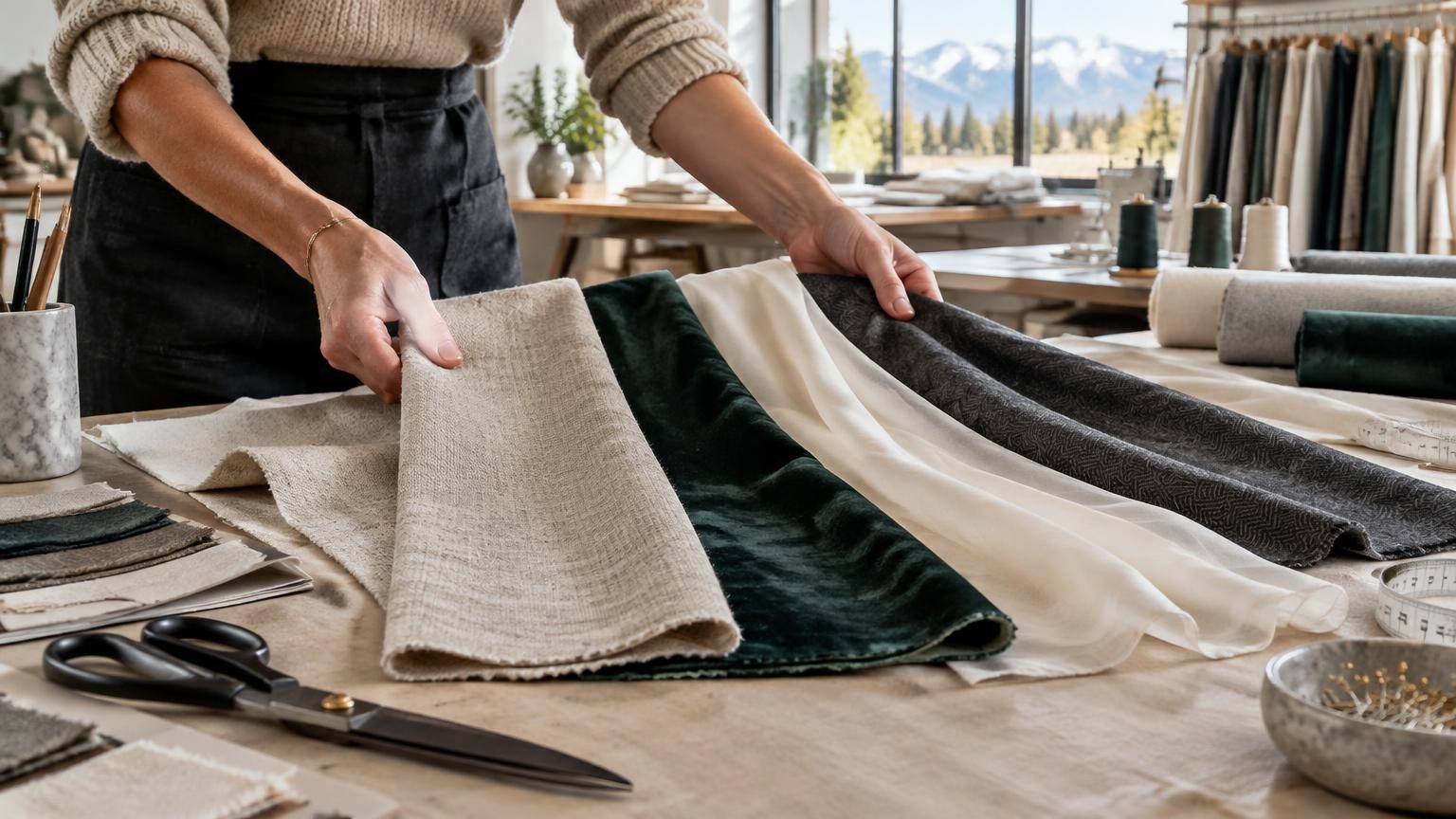
A custom fabrication workroom operates on a completely different model. Instead of standardizing products for scale, the workroom customizes construction for each project. Every panel is cut individually to the project''s specifications. Every header is sewn to order. Every lining is chosen based on the fabric weight and light control requirement. Every hardware set is sized to the specific window and panel weight.
The workroom''s catalog is not a list of products. It is a list of techniques, constructions, and capabilities that can be combined to meet the project''s requirements. A designer can specify a pinch pleat drapery in any fabric the trade market offers, with any lining, on any hardware. The workroom executes the specification.
This flexibility comes with tradeoffs. Custom fabrication takes longer than retail shipping. Custom fabrication costs more than retail production. Custom fabrication requires a designer or trade professional to specify the construction details that a retail brand would choose for the client.
For the right projects, those tradeoffs are the entire point. The timeline allows for fabric that is worth waiting for. The cost reflects the craftsmanship. The specification process captures the design intent with a precision retail cannot match. For more on workroom partnerships, see the Interior Designer''s Guide to Partnering with a Custom Fabrication Workroom.
Where the Quality Difference Shows Up
The quality distinction between retail and custom fabrication is not visible at twenty feet. From across a room, retail drapery and workroom drapery can look similar. The distinction appears in the details that reveal themselves over time and on closer inspection.
Hem construction. Retail drapery typically uses a serged hem or a simple folded hem. Custom workroom drapery uses a weighted hem with hand-sewn blind stitching, which hangs straighter and holds its shape over years of use.
Pleat consistency. Retail pinch pleat drapery uses machine-sewn pleats at standardized spacing. Workroom pinch pleat drapery uses hand-finished pleats with spacing calibrated to the specific panel width and fullness, resulting in visually consistent pleats across the panel and across multiple panels in a pair.
Lining integration. Retail drapery linings are often sewn along the full perimeter, which can produce puckering and wrinkles as the fabric and lining respond differently to humidity. Workroom drapery linings are tacked along the header and hem only, allowing the face fabric and lining to move independently and maintain a smoother drape.
Pattern matching across panels. Retail drapery cuts panels from the bolt sequentially without pattern alignment considerations. Workroom drapery matches pattern repeats across paired panels so that the pattern reads continuously when the drapery is drawn closed.
Fabric selection. Retail catalogs carry a limited fabric range selected for price point, cleanability, and supply chain efficiency. Workroom fabrication uses the full trade fabric market, including premium mills that retail brands cannot source at their price points.
Hardware quality. Retail hardware is typically the lowest bidder for the brand''s price point. Workroom hardware is sourced from premium drapery hardware manufacturers with a range of finishes, bracket styles, and construction qualities retail does not access.
Edge cases. Retail cannot handle unusual window configurations, custom trim details, or specifications outside its product catalog. Workroom fabrication handles every edge case the project requires.
Why This Matters to the Client
Clients who have only experienced retail window treatments do not automatically understand the difference. When a designer proposes custom fabrication at a workroom price point, the client may question the premium over the retail option they are familiar with.
The explanation for clients is not about technical construction details. It is about outcomes.
Custom fabrication delivers a drapery that fits the specific window exactly, in fabric the client chose from an unrestricted market, with construction that will hang beautifully for decades. Retail delivers a drapery that fits an approximation of the window, in fabric from a limited catalog, with construction that will show its age within a few years.
For clients building long-term homes, the cost of custom fabrication amortizes across the life of the treatment. For clients in rental properties, shorter-term occupancies, or budget-constrained projects, retail may be the right answer. The designer''s role is helping the client match the right solution to the actual project.
On premium residential projects, the case for custom is usually straightforward once the client sees the distinction in person. A workroom visit where the client can hold a workroom-constructed sample alongside a retail drapery panel makes the difference tangible in a way words cannot.
When Retail Is the Right Choice
Not every project warrants custom fabrication. Designers who specify retail where retail is appropriate are serving their clients well, not settling.
Retail is the right choice when the fabric selection falls within the retail catalog and the client likes the available options. Retail is the right choice for secondary rooms where the budget priority is elsewhere in the project. Retail is the right choice on rental property buildouts, spec homes at competitive price points, or vacation homes where the client''s investment tolerance is calibrated differently than on their primary residence.
A skilled designer specifies custom where custom delivers value and retail where retail delivers value. The mistake is specifying custom everywhere without evaluating the project''s actual needs, or specifying retail everywhere because the designer is unfamiliar with workroom partnerships.
How to Talk About the Difference with Clients
For designers who need to walk clients through the distinction, a few framing choices help.
Avoid comparing price points directly. Retail drapery at $300 per panel and custom drapery at $1,500 per panel are not the same product, and framing the conversation as a 5x price increase focuses attention on the wrong dimension. Instead, frame the conversation around what the client is actually buying: the fabric, the construction, and the expected lifespan.
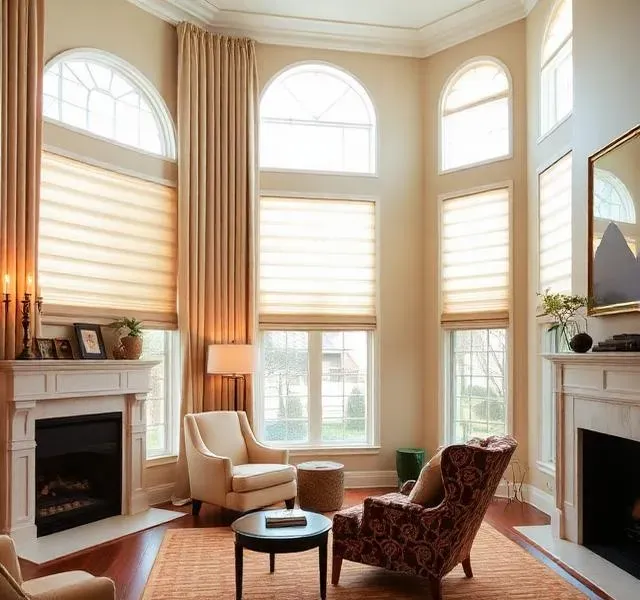
Show the client a completed workroom project if possible. A photograph of a custom drapery in a finished room is more persuasive than a technical comparison. Clients respond to how the drapery looks in context, not to construction specifications.
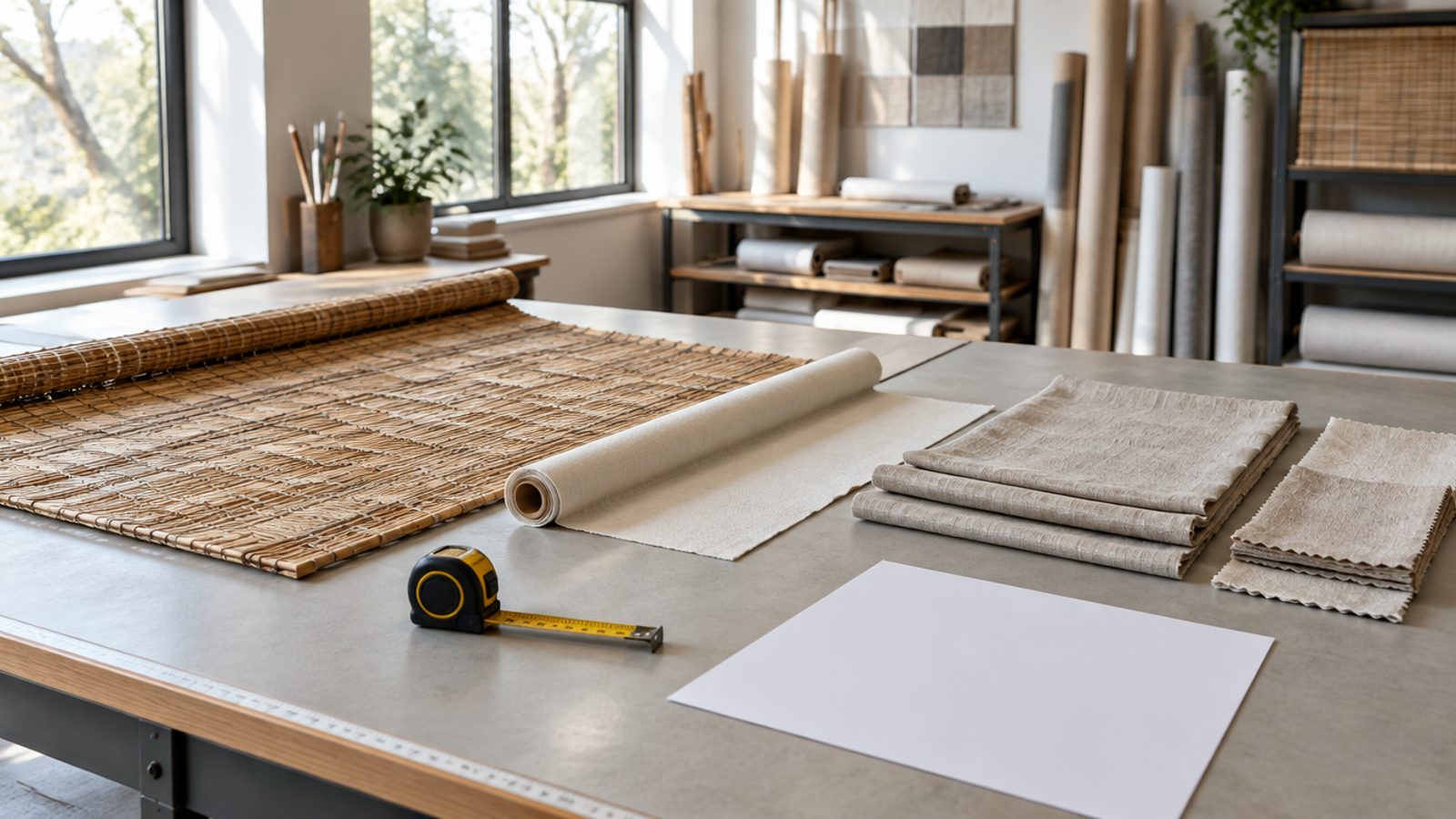
Offer a workroom visit for clients on premium projects. Walking through the Roseworks workroom, seeing the cutting tables and the fabric library, meeting the fabricators, changes the client''s understanding of what they are buying. The $1,500 panel stops being a line item and becomes a piece of craftsmanship they have now witnessed being made.
For designers who want to explore workroom fabrication for their next project, request a trade quote from Roseworks. For the full specification framework, review how to specify custom drapery for your client''s project. For timeline planning in client communications, see managing client expectations on custom window treatment timelines.
Custom is a different product, not a more expensive version of the same product.
Partner with Roseworks Fabrication on your next project and see the difference a custom workroom delivers. Request a trade quote today.