The Interior Designer's Guide to Partnering with a Custom Fabrication Workroom
The workroom is the quiet half of every successful window treatment project. Clients see the finished drapery. They notice the stack, the drape, the light control, the way a panel breaks on the floor. They rarely think about the hands that cut the fabric, the tables where panels were laid out, or the communication trail that moved a project from specification to installation. For interior designers, the workroom is where a specification either becomes real or falls apart.
Choosing a custom fabrication workroom is not a one-time decision. It is the foundation of a long-term relationship that affects every project you deliver. A strong workroom partnership raises your ceiling on what you can specify, shortens your timelines, reduces your revision cycles, and protects your reputation when a client sees the final installation. A weak partnership costs you money, credibility, and eventually clients.
This guide is written for designers who are evaluating workrooms or rethinking a current workroom relationship. It covers what a fabrication workroom actually does, what to expect in a healthy partnership, the capabilities that matter, and the signals that separate a reliable workroom from one that will leave you exposed on the next punch list.
What a Fabrication Workroom Actually Does
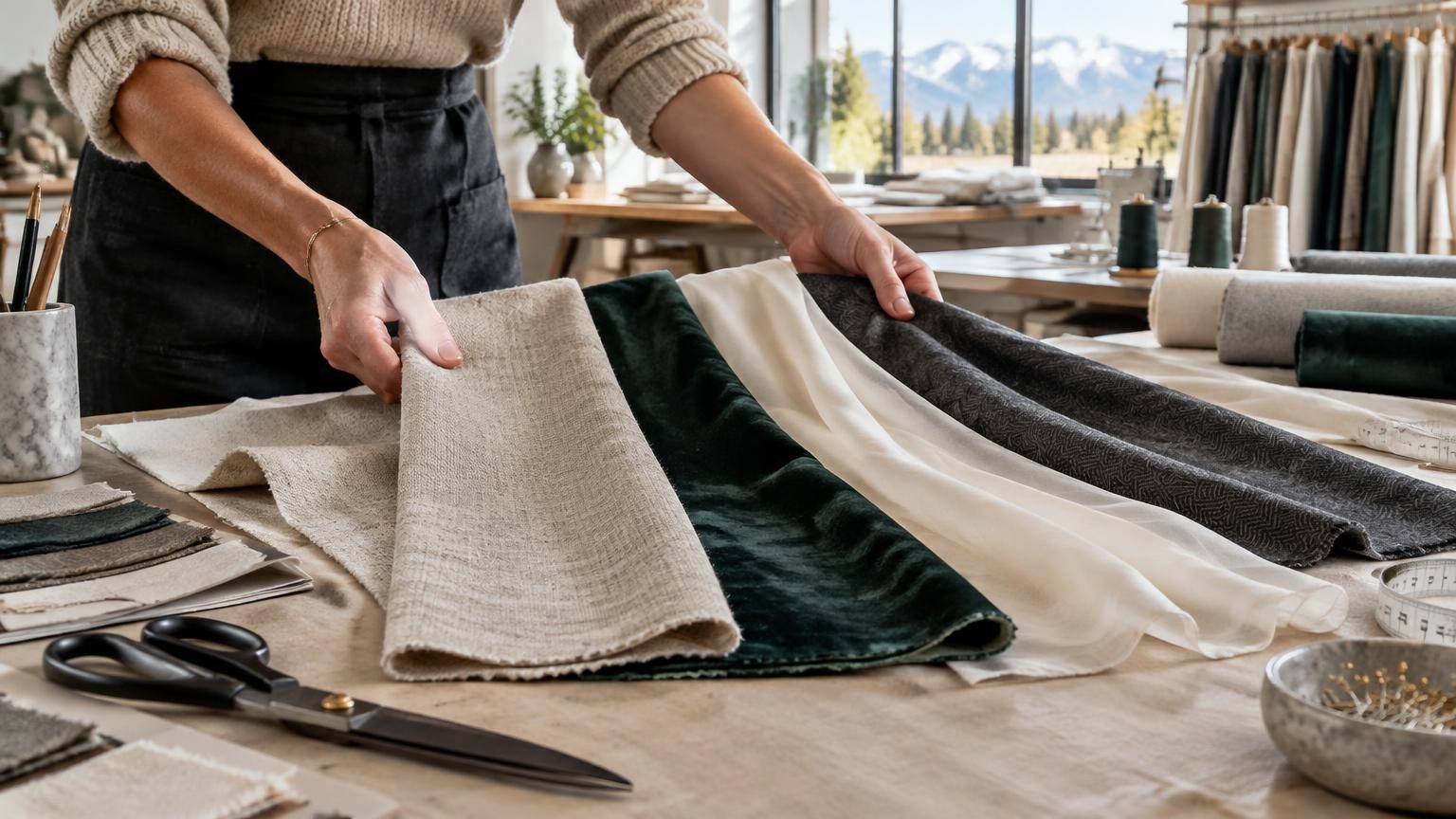
A custom fabrication workroom is the production partner that turns your specifications into finished window treatments. The best workrooms handle far more than sewing. They measure. They review specifications. They source hardware. They fabricate drapery, roman shades, valances, cornices, pillows, bedding, and upholstery. They coordinate installation timing. They catch problems before the treatment reaches your client''s home.
A workroom is not a manufacturer in the national sense. National manufacturers operate at volume, use templated processes, and treat your project as one of thousands moving through an assembly pipeline. A fabrication workroom operates at the project level. Every job is cut individually, sewn by a human who reviewed the spec, and inspected before it leaves the building.
For interior designers working on custom residential projects, the workroom is the only production model that accommodates bespoke fabric choices, unusual window configurations, custom headers, non-standard lengths, and the level of finishing detail that separates a custom project from a retail purchase. For a closer look at the case for a regional partner, see why interior designers choose a local fabrication workroom over national manufacturers.
What a Healthy Workroom Partnership Looks Like
The strongest designer-workroom relationships share a few traits that you can evaluate before committing to a project together.
Fast, accurate quoting. A workroom that takes a week to return a quote is signaling its capacity and communication culture. Roseworks Fabrication returns quotes within 48 hours for standard specifications. That pace lets you build your client proposals without blocking your pipeline on a workroom''s response time.
Specification review before fabrication begins. A good workroom reads your spec sheet and flags potential issues before cutting fabric. Wrong fullness for the header type. Hem allowances that do not account for lining shrinkage. Hardware that will not support the panel weight. A workroom that cuts first and asks questions later is a workroom that will cost you money on revisions.
In-house capabilities across the project scope. Fragmented production means more points of failure. A workroom that fabricates drapery in-house but outsources roman shades, then sources hardware from a third party, introduces coordination risk at every handoff. Roseworks fabricates drapery, roman shades, valances, cornices, pillows, bedding, and upholstery within a single Westminster workroom, with direct hardware sourcing and integration. Learn more about how Roseworks supports trade professionals from specification to install.
Clear communication on timelines. Lead times vary by scope and fabric availability. A workroom that gives you honest timelines upfront, then updates you when something shifts, is a workroom you can promise dates to your clients on. A workroom that quotes aggressive timelines to win the job and then slips by two weeks is a workroom that will damage your client relationships.
Installation handoff support. The best workrooms do not consider their job done when the panels leave the building. They support your installer with hardware lists, hanging instructions, and questions from the field. For projects where Roseworks coordinates installation directly, that support is built into the scope.
The Capabilities That Matter for Residential Projects
The range of what a fabrication workroom can produce determines the range of what you can specify. A workroom limited to flat panel drapery is a workroom that narrows your design options. A full-capability workroom opens up the full spectrum of soft furnishings.
Drapery fabrication. Pinch pleat, inverted pleat, tailored pleat, goblet, ripple fold, rod pocket, and grommet configurations. Lining options including blackout, interlining, and thermal. Fullness calibrated to the header type and fabric weight.
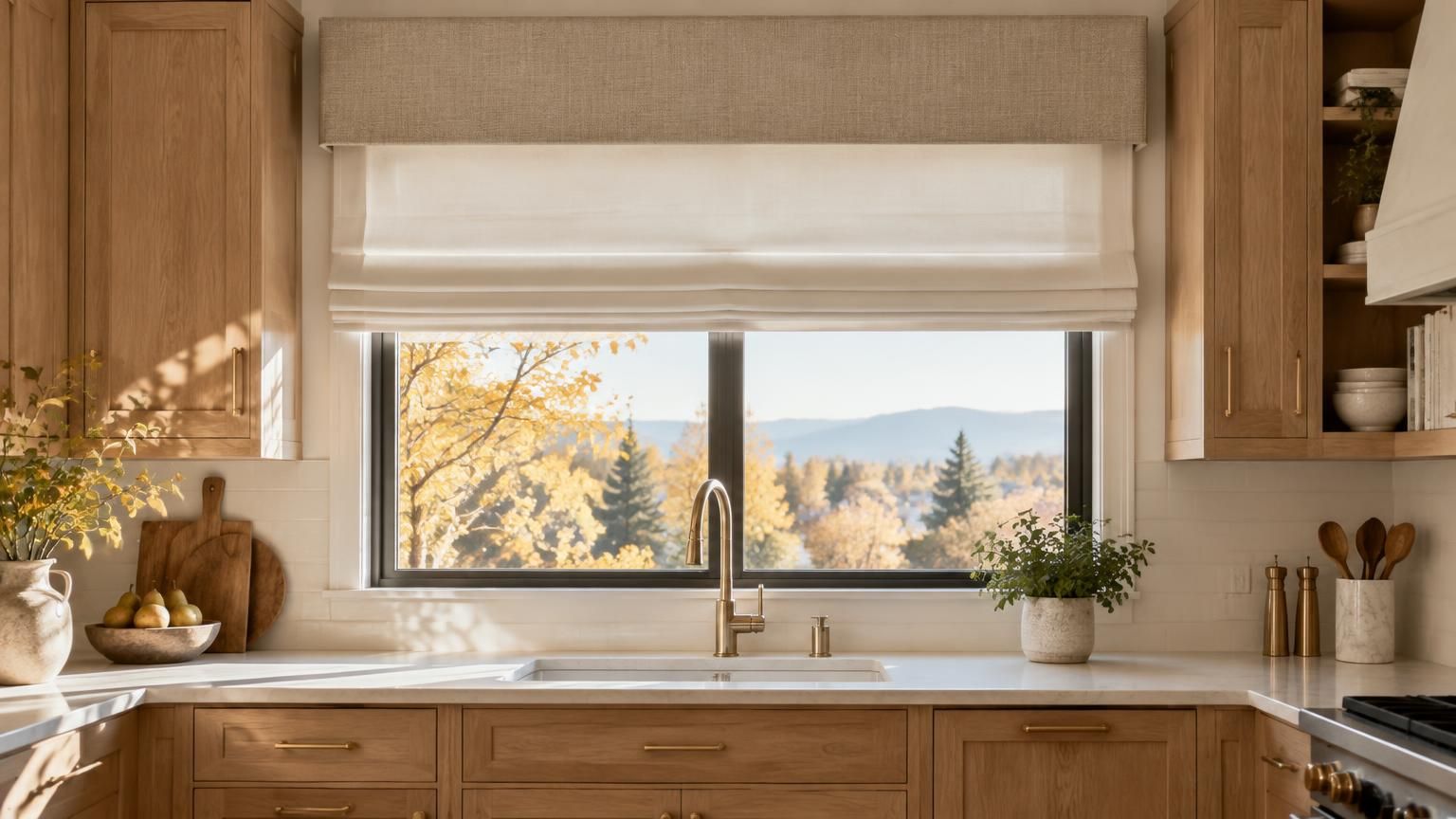
Roman shade fabrication. Flat fold, soft fold, relaxed, hobbled, and battened styles. Cordless and motorized lift systems. Inside mount and outside mount configurations. Coordinated with room-darkening linings or sheer filtration as specified.
Valances and cornices. Upholstered cornice boxes, soft valances, swag and jabot configurations, and custom box-pleat designs. Often the detail that distinguishes a fully designed window from a production-grade treatment.
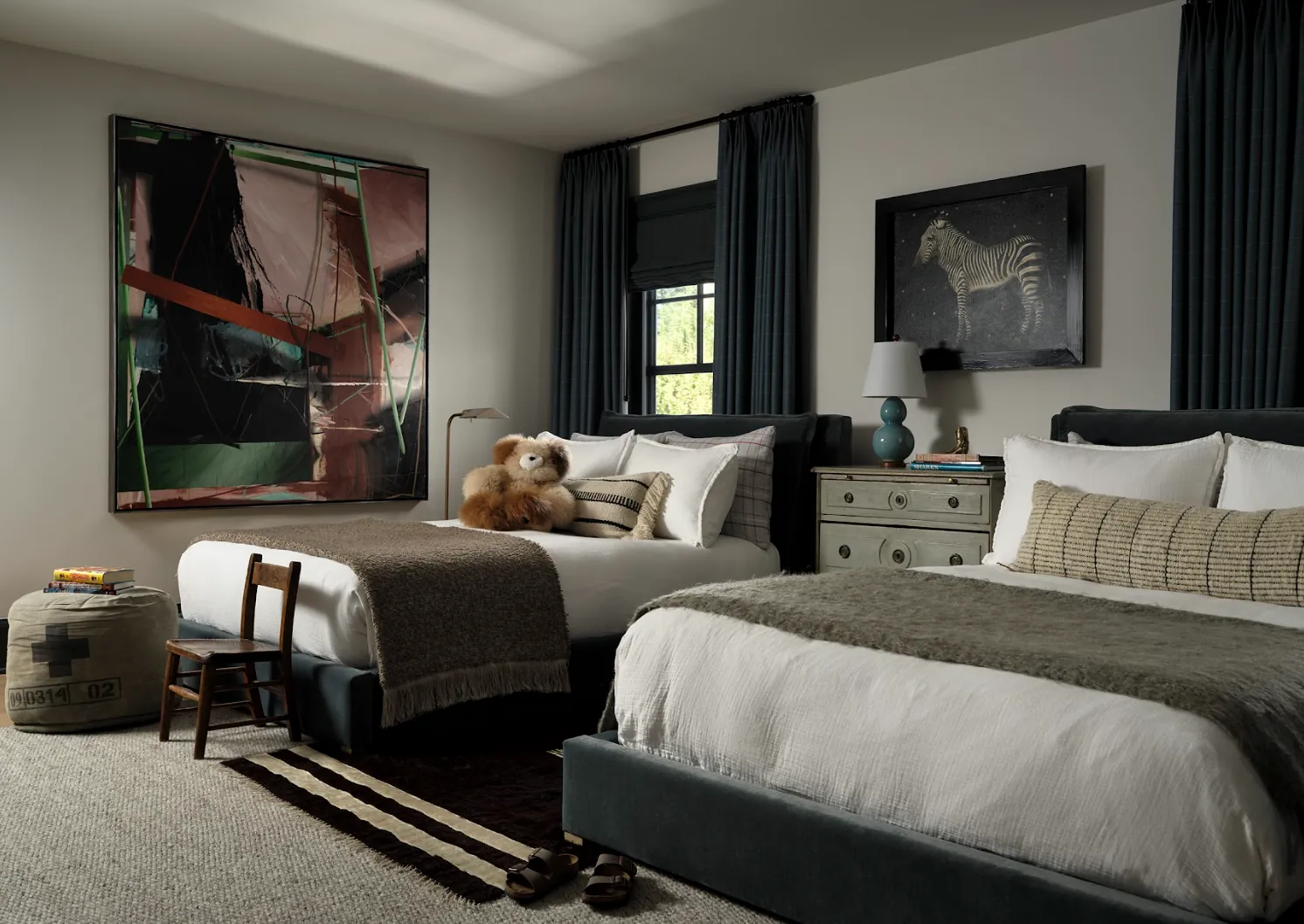
Pillows, bedding, and upholstery. A complete residential project specifies beyond the window. Coordinated pillows, custom duvet covers, shams, bed skirts, and upholstered furniture pieces create a cohesive palette that a single workroom can execute consistently.
Motorized hardware integration. Smart home integration has moved from specialty to expectation in premium residential work. A workroom that integrates motorized tracks with Lutron, Crestron, and Control4 systems is a workroom that keeps you competitive on high-end projects.
How to Evaluate a Workroom Before Committing
Before sending a workroom your first project, run a structured evaluation. The cost of switching workrooms mid-project is high. The cost of learning a workroom is unreliable after three projects is higher.
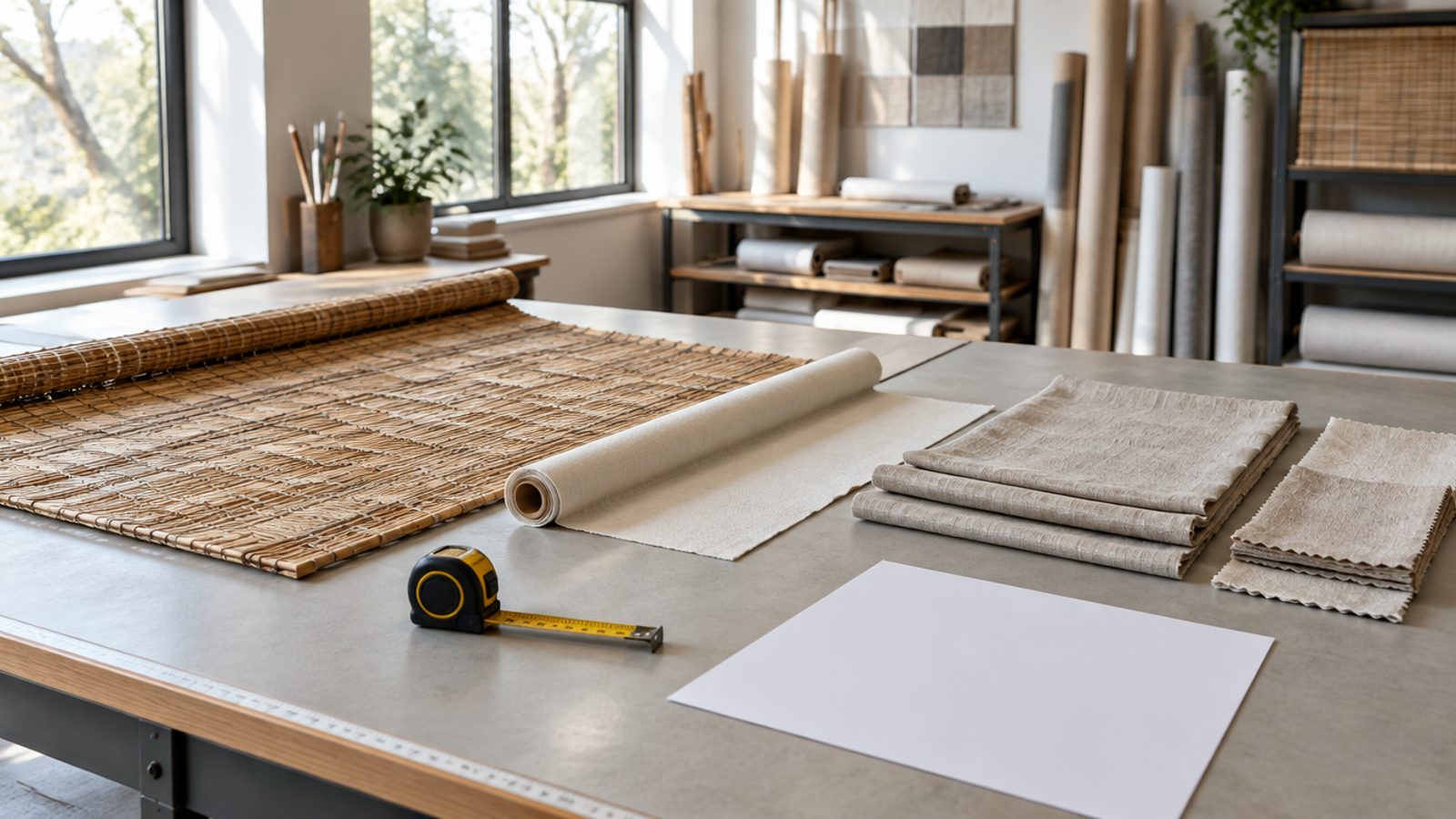
Review the workroom directly. Visit the facility if you are local. A Westminster workroom is a 30-minute drive from most Denver design firms. Walk the cutting tables. See the sewing stations. Look at the condition of fabric storage. A workroom that is clean, organized, and busy is a workroom that respects its own production process. Read more about Roseworks Fabrication.
Ask to see sample work. Not photography of finished rooms. Actual fabricated samples. A pinch pleat panel, a roman shade header, a cornice corner. The hand construction on samples tells you everything about the level of craftsmanship your clients will receive.
Request a reference conversation. Talk to a designer who has completed at least three projects with the workroom. Ask about timeline accuracy, communication during problems, and how issues were resolved. A workroom that has never had a problem is a workroom that is hiding its history.
Start with a small project. Resist the temptation to move an entire firm''s production to a new workroom on day one. Send one room. Evaluate the full cycle from quote to install. Then scale up if the partnership proves out. Pricing structure matters here too; review our trade pricing and COM policies before sending a first project.
Red Flags to Watch For
Experience teaches designers to recognize the warnings early. A few patterns consistently precede workroom failures.
Unclear pricing or fee structures. A workroom that resists publishing pricing, charges undisclosed upcharges, or changes its quote after fabrication begins is a workroom that will erode your project margins.
Silence during production. A workroom that responds immediately during the quoting phase, then goes quiet for three weeks while fabricating, is a workroom that will surprise you at the end. Regular status updates are a cultural choice the workroom makes or fails to make.
Reluctance to handle complex specifications. A workroom that pushes back on unusual headers, non-standard sizes, or custom trim work is a workroom that is optimizing for its simplest workflow. That optimization happens at the cost of your creative range.
Installation friction. A workroom that blames the installer, the measurements, or the designer when something does not fit correctly is a workroom that has not built accountability into its process.
The Long Game of Workroom Partnership
The best workroom relationships span years and hundreds of projects. The workroom learns how you specify. You learn how the workroom communicates. Over time, the handoffs become faster, the misunderstandings fewer, and the collaboration more valuable. Neither side has to rebuild trust on every new project.
For Colorado-based interior designers, Roseworks Fabrication operates as that long-term partner. The workroom serves designers, architects, builders, and trade professionals across Colorado and the Rocky Mountain region. Every project passes through a consistent team. Fabric, hardware, and fabrication details are documented against your firm''s historical specifications. Over time, the partnership compounds in value.
For designers evaluating a new workroom, the question to ask is not whether the workroom can fabricate a single project. The question is whether you can build a decade of projects on the foundation of this partnership. If the answer is yes, you have found a workroom. If the answer is no, keep looking.
To learn more about trade partnerships with Roseworks Fabrication, explore how we support trade professionals from specification to install, or review our trade pricing and COM policies. For a direct conversation, request a trade quote and we will respond within 48 hours.
Build the workroom relationship that raises your ceiling.
Roseworks Fabrication serves interior designers, architects, builders, and trade professionals across Colorado. Request a trade quote today and we will respond within 48 hours.
Related reading: For specification streamlining at scale, see how architects and builders can streamline window treatment specifications. For the broader case for custom fabrication, see the difference between retail window treatments and custom fabrication.